
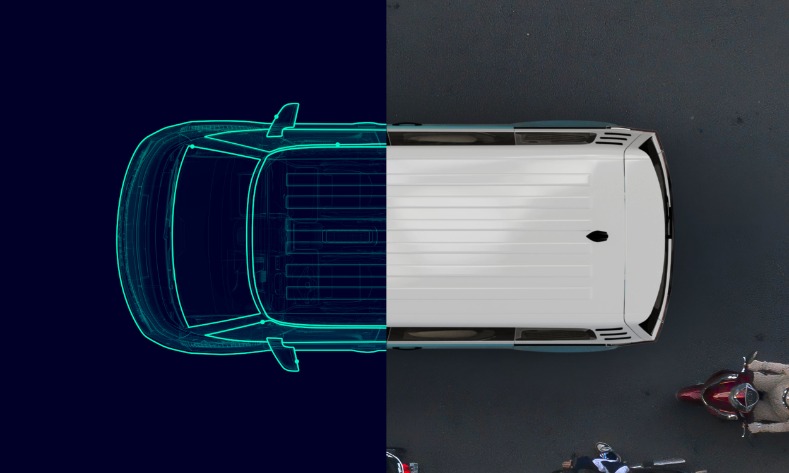
Pave360 Automotive is a new category of digital twin software
Siemens, an industrial technology company, has launched its Pave360 Automotive technology, a new category of digital twin software that is pre-integrated and designed as an off-the-shelf offering to address the complexities of automotive hardware and software integration
Pave360 Automotive has been developed to enable automotive manufacturers and suppliers to accelerate the creation of software-defined vehicles (SDVs) through early, full-system virtual integration that mirrors real vehicle hardware and advances both application and low-level software development for ADAS, AD, and IVI. This eliminates the need for customers to build their own digital twins before testing software and reduces time-to-market for critical applications.
The complexity of vehicle hardware and software is rising, putting development teams under pressure to deliver innovation more quickly, compete with new market entrants, and meet sophisticated consumer expectations. A new approach is needed as traditional development methodologies are no longer able to manage system-level interdependencies between ADAS, AD, and IVI functions.
Tony Hemmelgarn, president and CEO of Siemens Digital Industries Software, said, “The automotive industry is at the forefront of the software-defined everything revolution, and Siemens is delivering the digital twin technologies needed to move beyond incremental innovation and embrace a holistic, software-defined approach to product development. Pave360 Automotive will empower automotive companies to innovate with confidence, agility, and scale, to realise the full potential of the SDVs and set the standard for what’s possible across all industries.”
Pave360 Automotive utilises Siemens’ expertise in digital twin technology, enabling automakers to:
- Jumpstart vehicle systems development from the earliest phases with ADAS, AD, and IVI customisable virtual reference designs.
- Unify development, optimise efficiency, and increase cloud-based collaboration with one digital twin for all teams.
- Customise and scale by adding software, models, and external hardware as required.
- Accelerate software development utilising hardware-like simulation speed of the latest automotive IP, including the Arm Zena Compute Subsystem (CSS).
- Validate with real-world feedback by connecting digital twins to physical hardware and testing in real vehicles.
System-level digital twins for SDVs using existing technologies can be complex and time-consuming to create and validate. To address this, Pave360 Automotive provides an integrated, system-level digital twin that can be deployed on day one to reduce time, effort, and cost.
Following collaboration with Arm, which resulted in accelerated virtual environments for its Arm Cortex-A720AE in 2024 and Arm Zena CSS in 2025, Siemens is now further integrating Arm Zena CSS with Pave360 Automotive to allow the industry to build on Arm faster and more seamlessly than before.
Suraj Gajendra, vice president of products and solutions, Physical AI Business Unit, Arm, said, “As vehicles become increasingly AI-defined, automakers and silicon partners need new ways to manage rising complexity without slowing innovation. With Arm Zena CSS available inside Siemens’ pre-integrated Pave360 Automotive environment, partners can not only customise their solutions leveraging the unique flexibility of the Arm architecture but also validate and iterate much earlier in the development cycle, helping them to get to market sooner.”