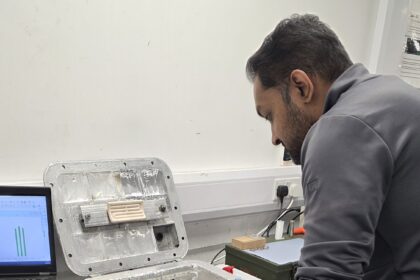
Lydia Arundel hears how Plastic Coatings has transitioned from specialist finishing to long-term manufacturing partnerships
Plastic Coatings has spent decades developing its expertise in industrial coating and finishing, working across sectors such as automotive, oil and gas, aerospace and defence. Its history reflects many of the changes that have shaped UK manufacturing, from tighter legislation and rising costs to changing supply chains and increasing demands on specialist processes.
During International Design Engineer’s visit to the company’s 24-hour processing facility in Kingswinford, the West Midlands, I spoke to Carl Allison, Director of Plastic Coatings, about the evolution of the business, the challenges of running a specialist finishing operation, investment in plant and equipment, and why manufacturers continue to rely on specialist subcontractors.
TELL US ABOUT YOUR BACKGROUND AND WHAT LED YOU TO YOUR CURRENT POSITION?
I started in engineering around 25 years ago with a Japanese company at a greenfield UK site, manufacturing water pumps and oil pumps for the automotive industry. I then moved to a more traditional UK engineering company specialising in tube manipulation, with some aerospace work but primarily automotive.
I joined Plastic Coatings from there, initially working in quality engineering, which was my discipline at the time. About 12 years ago, I moved over to the commercial side, bringing more of an engineer-led approach to selling. That means solution-based selling rather than simply saying we have a great range of products, or we can be cheaper than everyone else. It’s about finding a solution that works for the customer.

WHAT ARE THE BIGGEST CHALLENGES AND OPPORTUNITIES FOR THE BUSINESS CURRENTLY?
The biggest challenge right now is unpredictability. You just don’t know what’s going to happen from one day to the next.
At the moment, we have around 48–72 hours of workload ahead of us, but there’s no guarantee after that. I know I’ve got two days’ work for the 80 people we have working here. If nothing comes in tomorrow, on day three I’ve got nothing for the day after.
The biggest opportunity is the significant increase in spending on defence. Our turnover in defence is around five times what it was in the prior year, and we expect that to continue increasing. Nuclear is another good opportunity, with a lot of money being spent in the UK on nuclear infrastructure.
WHICH MARKETS ARE MOST IMPORTANT TO YOU?
Our biggest single industry is oil and gas. Probably 30–35% of our turnover is in oil and gas, split between the fastener business, filter screens and some ancillary products, including valves and bits of pipework.
HOW HAS THE FINISHING INDUSTRY CHANGED IN THE LAST 20 YEARS?
The biggest change is probably the reduction in the number of competitors. There used to be finishing companies everywhere, but changes in legislation, costs and environmental requirements have pushed costs up and driven people out of the market.
That has got rid of a lot of the competition, but it has also got rid of a lot of the market. There isn’t as much manufacturing in the UK anymore compared with where we were 20 years ago.
WHAT ARE THE BIGGEST CHALLENGES YOU SEE AHEAD?
The biggest thing we’re preparing for is the change in the energy market. Most of our processes run on gas, and electricity is seven or eight times the price of gas.
We’re looking at sustainability measures such as solar power and green sourcing of energy, and we’ve got a zero-carbon roadmap. I think that’s going to be the biggest challenge over the next 10–15 years as the Government drives further towards net zero and energy-intensive industries like ours look to remain competitive.
There are significant subsidies abroad that we don’t get in the UK. If your cost base is moved significantly by energy prices, minimum wage and everything else, you can’t compete. Brexit also means that everything you try to get out of the country carries some sort of tariff or levy, and anything you try to bring in has the same. It’s very difficult to compete with that.
WHEN DID PLASTIC COATINGS MOVE TO THIS SITE?
Plastic Coatings started in 1952 in Guildford, operating with a small team of people dipping metal into plastic to provide corrosion-resistant coatings. The business outgrew that site and moved here sometime in the 1960s. At one point we had five or six sites around the country, but over time we consolidated back to one site here.
HOW IMPORTANT IS HAVING SUCH A BROAD RANGE OF COATING CAPABILITIES UNDER ONE ROOF?
We’re one of a very limited number of companies in the UK with the range of coatings we have. Having that capability under one roof means we can handle a wide variety of requirements and work for different industries, rather than being reliant on one particular market.
HOW MUCH INVESTMENT IS REQUIRED TO MAINTAIN THE PLANT, AND IS MAINTENANCE A SIGNIFICANT CHALLENGE?
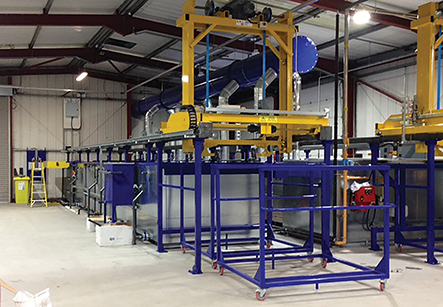
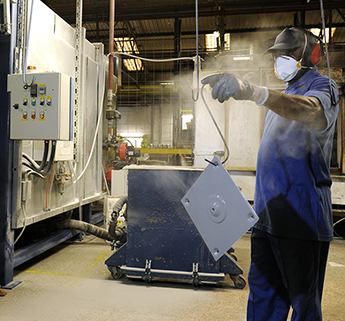
I’d say about £4.5 million to set up all the equipment, and probably £1.5 million has been spent over the last 10 years updating it. We don’t replace the whole plant every time technology changes; we replace individual parts. That might mean updating a spray booth or adding automation to a spray booth, rather than replacing the whole electrostatic oven, track and everything else.
Maintenance is a big deal for us. Finding people who understand the plant and equipment is difficult because it’s quite different from a normal industrial plant. We’ve got things like conveyors, but the ovens are a very niche piece of equipment and you need people who understand how to keep them running.
HAS GROWTH IN DEFENCE SPENDING CHANGED THE TYPE OF WORK YOU’RE TAKING ON?
Defence has always been a specialist market, but with increased spending and increased volumes, specialist capacity is being used up. Defence manufacturers are therefore looking to other manufacturers to do work they might not previously have outsourced.
We’ve done PVC coating for BAE Systems for more than 40 years, but we’d never done wet paints such as Desert Tan and NATO Green. We’ve been doing a lot of that work over the last six months.
LOOKING AHEAD
From maintaining a wide range of processes and equipment to managing changing customer requirements, energy costs and recruitment, the challenges extend well beyond the coating process itself.
For Plastic Coatings, much of that capability has been built over decades through investment, experience and the retention of specialist knowledge. As the business continues to respond to changing markets and manufacturing requirements, that combination of technical expertise, flexibility and people remains central to its operation.
Read the October issue of International Design Engineer magazine here, or visit our magazine archive for all our recent publications.