Engineers have always understood a simple principle: we cannot manage what we cannot measure.
For decades, preventative maintenance programmes across the oil and gas industry have relied on scheduled inspections, operator experience, fixed instrumentation and periodic condition assessments. While these approaches have improved reliability and safety, they share a common limitation. There simply have not been enough process measurements available across operating facilities to provide the visibility needed to identify every developing issue before it becomes a costly maintenance event.
Digitalisation is changing the equation
Much of the industry’s discussion around digital transformation focuses on artificial intelligence, cloud computing and predictive analytics. However, the foundation of digitalisation begins much closer to the process itself. Before software can generate meaningful insights, engineers need accurate, reliable and abundant data. The ability to increase measurement density throughout an operating asset at a practical cost is what is truly transforming preventative maintenance.
Historically, adding instrumentation has been expensive and complex. Every new measurement point required engineering design, process penetrations, field wiring, junction boxes, marshalling cabinets and control system integration. In many cases, installation also required plant outages. As a result, instrumentation was typically reserved for only the most critical areas of the process.
The consequence was that large portions of valuable equipment operated with limited continuous visibility. Reliability teams were often forced to make maintenance decisions using incomplete information, identifying problems only after performance had already deteriorated.
Wireless technology has helped remove some of these barriers, but early adoption often replicated existing instrumentation philosophies rather than rethinking them. In many facilities, a wired pressure transmitter simply became a wireless pressure transmitter, and a wired RTD became a wireless RTD. The copper disappeared, but the one-instrument, one-device approach remained.
While installation costs fell, new challenges emerged. Networks became crowded with individual devices transmitting single measurements. Battery maintenance requirements increased, and assets became surrounded by isolated instruments providing limited operational context.
A systems-level approach
Process measurements naturally exist in groups around critical equipment. Pumps, heat exchangers, reactors and compressors are not assessed using a single variable. Engineers require a combination of temperatures, pressures, vibration, flow conditions and equipment status indicators to understand asset health and process performance.
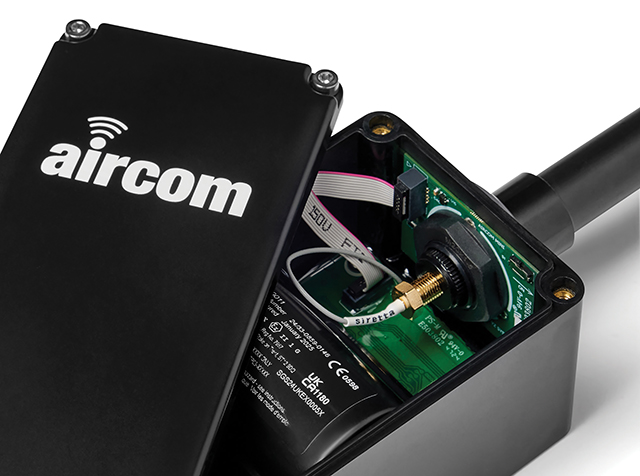
Modern telemetry platforms are increasingly reflecting this reality. Rather than treating every measurement as a separate endpoint, multiple inputs can be consolidated into a single field device. Temperature sensors, pressure transmitters, 4-20mA instruments and discrete signals can all be integrated into a hazardous-area communication node, reducing infrastructure while creating a more complete picture of equipment performance.
Solutions such as the AIRCOM End Node platform from Daily Thermetrics demonstrate this evolution. Multiple process variables can be collected at the asset level and transmitted through a single LoRaWAN communication path rather than numerous independent wireless devices. This reduces installation complexity, minimises maintenance requirements, improves network efficiency and delivers richer operational data. More importantly, it enables engineers to evaluate equipment as an integrated system rather than a collection of isolated measurements.
Consider a pump. A single bearing temperature reading may reveal very little on its own. However, when viewed alongside suction pressure, discharge pressure, motor load and casing temperatures, that same measurement becomes significantly more valuable. Context transforms data into actionable information. This principle applies throughout refining, petrochemical and upstream operations.
Temperature monitoring offers significant opportunities for preventative maintenance because thermal behaviour is often one of the earliest indicators of deteriorating asset condition. Changes in temperature can reveal refractory degradation, insulation failure, exchanger fouling, catalyst issues, flow restrictions and abnormal operating conditions long before production losses occur.
Traditionally, however, collecting additional temperature measurements has often been difficult and expensive. Conventional instruments typically require thermowells and process penetrations, increasing both installation costs and potential process risks.
Non-invasive temperature monitoring
Modern surface-mounted sensors such as the Daily Thermetrics OmniTrace and MagVSS technologies can be installed directly onto pipelines, vessels, reactors and storage tanks without breaching the process boundary. Installation is faster, costs are lower and measurements can be deployed in locations that were previously considered uneconomical.
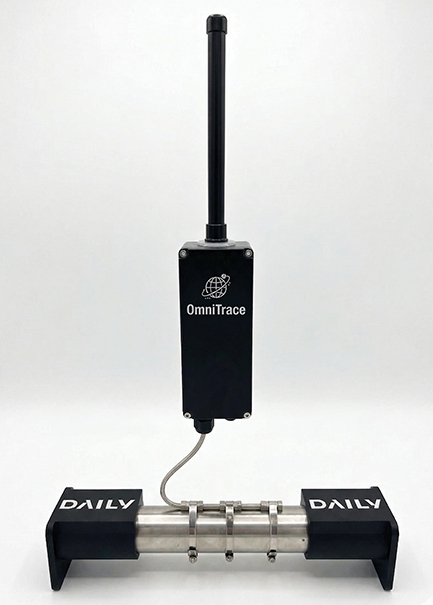
The result is a dramatic increase in measurement density. Instead of monitoring one or two points on a large asset, engineers can monitor dozens. Rather than relying on isolated readings, they can build detailed thermal profiles that reveal localised changes in equipment condition.
For refractory-lined equipment, external temperature monitoring using Daily Thermetrics’ MagMesh system can identify developing hot spots and insulation failures before they become reliability concerns. On heat exchangers, multiple measurement points can help detect fouling and performance degradation, while on process piping, they can highlight flow abnormalities, restrictions and changing operating conditions.

The value of these measurements increases further when integrated into broader digital maintenance systems. Continuous monitoring enables trend analysis rather than periodic inspection. Data can be transferred into historians, SCADA systems, asset management platforms and analytics applications, allowing maintenance teams to identify deviations from normal operating conditions and prioritise interventions based on actual equipment health. This represents a significant shift from traditional time-based maintenance towards condition-based maintenance strategies.
Ultimately, the future of preventative maintenance will not be defined by artificial intelligence alone, nor by simply replacing cables with wireless devices. It will be defined by the industry’s ability to deploy more measurements, in more locations, at lower cost.
Digitalisation is fundamentally a measurement challenge. Advanced analytics cannot analyse data that does not exist, and predictive maintenance cannot succeed where instrumentation coverage is inadequate.
Low-cost wireless communications, non-invasive sensing technologies and consolidated telemetry architectures are now removing many of the barriers that once limited instrumentation projects. As measurement density continues to increase, operators gain greater visibility into asset performance, identify developing problems earlier and make better-informed maintenance decisions, all without the capital expenditure traditionally associated with expanding instrumentation infrastructure.
For more information visit: www.dailyinst.com