Component quality and compliance for global carmakers maintained by deep learning usage
Digital solution provider Zebra technologies corporation has partnered with TAS to increase production quality of automotive electric battery caps using Zebra’s aurora vision studio.
TAS is a specialist surface treatment technology supplier with its headquarters in Kreuzwertheim, Germany. The company plays an important role in precising finishing of metal surfaces, especially battery caps in electric vehicles protecting high-voltage batteries from external influences.
Temel Tas, managing director, TAS, said: “The successful integration of surface treatment technology and a custom-built quality control system with deep learning represents a significant advancement in quality control and our continuous commitment to innovation. With Zebra Technologies’ machine vision system, we can meet the high-quality standards of the automotive industry, and we are already planning to implement this technology in future projects.”
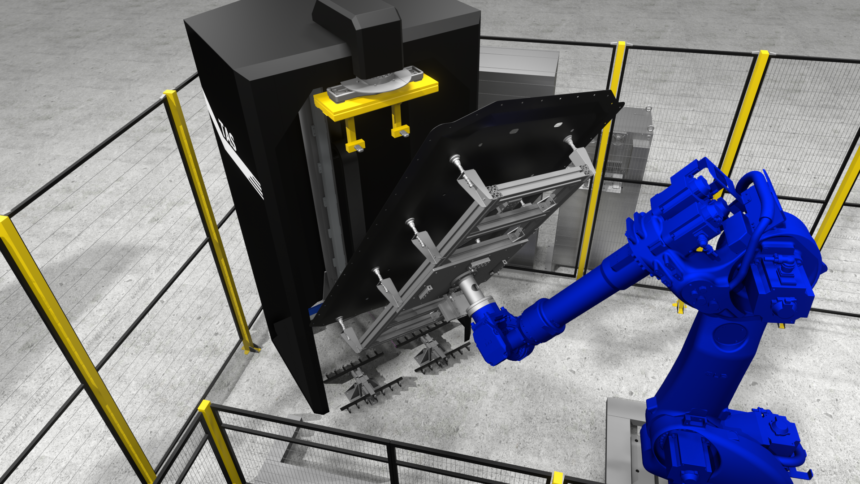
A robotic system handles metal sheets and manoeuvres them through various inspection stages. It is guided by a highly sophisticated camera system to check for defects. The camera system is custom built and can detect very small surface imperfections that could affect performance.
Using aurora vision studio has made the system safer with measurements becoming more accurate and efficient. ID Engineering built the camera system for TAS. The cameras are strategically positioned to scan each component for possible defects such as coating irregularities, surface scratches and laser marking issues.
Michael Sartor, machine vision department head, ID Engineering, said: “The main advantage of Zebra’s Aurora Vision Studio is its speed in development and execution time when analysing many and sometimes large image files simultaneously, which is much faster than other technologies we tested. The scalable Zebra system is easy to use and it’s no-code solution enables fast development. Beyond the technology, we appreciate the valuable support from Zebra.”
Deep learning tools are implemented for continual improvement across the manufacturing process. Extensive training is conducted using a comprehensive data set to recognise and classify certain types of defects using images.
Image data is annotated and fed to the system which retains and recognises new inspection criteria based on information or fine-tuned for defects already known to the system. This results in the deep learning program being able to constantly improve and develop.
Inspection processes remain flexible even after the installation of deep learning. This is an advantage over traditional tools which may not be as durable or adapt as well to changing production conditions. Flowchart-based image processing has a no-code approach which allows for convenient and fast training of the image processing solution.
Donato Montanari, vice president and general manager at Machine Vision, Zebra Technologies said: “This solution is a good example of how deep learning algorithms can be used to help ensure better quality in industrial production. Aurora Vision Studio and its deep learning add-on provide the foundation on which even huge amounts of data can be processed and utilised. This is an important contribution to the manufacturing technology of the future.”