Addressing the challenges of post processing metal 3D printed parts with innovative digital robots
Addressing the challenges of post processing metal 3D printed parts with innovative digital robots.
Post-processing metals parts can be a labour-intensive, time-consuming, filthy and even sometimes dangerous process, usually involving the removal of metal supports with hand tools. This manual process also poses additional challenges around repeatability, quality control, long lead times and high costs. Despite these drawbacks, this approach is currently the prevailing standard for post-processing most metal parts when they come off an additive manufacturing (AM) system.
However, a new innovative project is looking to offer an alternative approach. Led by Rivelin Robotics, Project CAMPFIRE (Certified Additive Manufactured Parts Finished with Intelligent Robotics Engine) is an Innovate UK funded initiative to deliver a complete digital post-processing solution for the automated finishing of flight parts, orthopaedic implants and gas turbine components produced using metal AM processes.
ROBOTS HOLD THE KEY
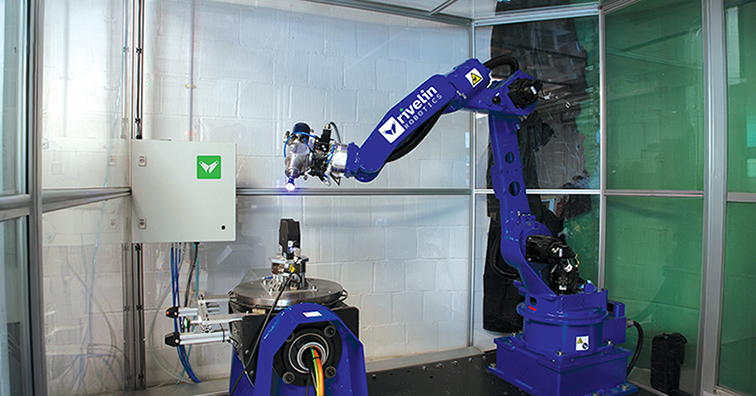
Founded in 2018 to combat the challenges of post-processing metal AM parts, Rivelin Robotics has since developed and commercialised its own Netshape Robots capable of providing truly autonomous post-processing capabilities. Built upon the company’s Netshape software, the robots have received huge interest from companies utilising metal AM processes for production applications at increasing scale.
“Leading Project CAMPFIRE is a significant milestone for Rivelin robotics,” says CEO Robert Bush. “While we have been delivering and installing Netshape Robots to key customers since last year, this project is a brilliant way to demonstrate the capabilities of Netshape across industries and applications. Users of metal AM for production are unanimous in their demand for an automated solution for support removal and finishing. Regardless of the parts and how or where they will be used, the shared pain in getting those parts from the AM machine to the point of use is prevalent and engenders collaboration to solve the issues. This is exactly what Project CAMPFIRE aims to do and in the coming weeks and months we look forward to sharing deeper insights and key results.”
Among those showing a keen interest are GKN Aerospace, Materials Solutions and Attenborough Dental and Medical. Going forwards, Project CAMPFIRE will provide a creative and collaborative way for the three companies to test and implement the Netshape robots for their own applications.
“Through the CAMPFIRE programme, GKN Aerospace is collaborating with Rivelin Robotics to explore the use of robotic systems to automate the process of removing support material from complex aerospace products,” says Brad Hughes, Principal Research Engineer – Additive Manufacturing at GKN Aerospace. “The Rivelin technology offers many attractive features to aerospace end users: the opportunity to remove human interactions, improve repeatability and productivity. Working with Rivelin, we will assess the performance of their current system on site at GKN Aerospace’s Global Technology Centre in Bristol, UK, and through feedback we will specify upgrades and modifications that can be incorporated into future systems. This will ensure the technology has a route to scalable adoption in the aerospace sector, meeting the needs of end-users. The upgrades will be validated by the consortium, through a joint technology demonstrator enabling us to quantify the benefits of the technology against the rudimentary manual removal methods.”