Valve actuation plays a critical role in maintaining safe and reliable operations across tank storage facilities, terminals, pipelines and process plants. Beyond delivering the required torque or thrust, actuators must ensure that valves move to a safe position when required while remaining practical to install, commission, operate and maintain.
In many tank and terminal applications, actuators form part of wider safety instrumented systems (SIS) and are required to operate in hazardous or exposed environments. At the same time, operators are seeking ways to reduce system complexity, improve maintainability and gain greater visibility into asset condition.
Electro-hydraulic actuation
Electro-hydraulic fail-safe actuation offers a practical solution. By combining electric operation with hydraulic control and mechanical spring-return or accumulator-based fail-safe functionality, these actuators provide precise valve control during normal operation while ensuring movement to a predefined safe position when required.
Fail-safe capability is particularly important for emergency shutdown (ESD), isolation, loading and unloading and product transfer duties. Depending on site requirements, actuators can be configured to fail-open, fail-close, or remain in position following the loss of an ESD signal or power supply. This flexibility allows operators to align actuator behaviour with specific process safety strategies.
Traditionally, electro-hydraulic systems have relied on external hydraulic power units, associated pipework and supporting infrastructure. While effective, these systems can increase installation costs, maintenance requirements and overall system complexity.
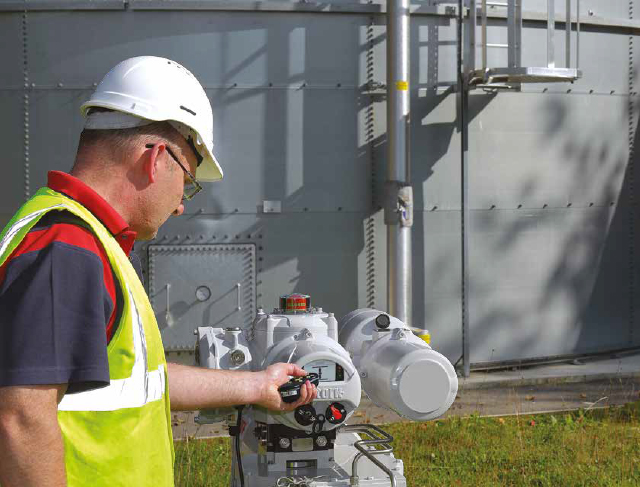
Self-contained electro-hydraulic actuators eliminate the need for central hydraulic power units by integrating the hydraulic system and fail-safe mechanism within a single package. For example, Rotork’s Skilmatic SI range combines a self-contained electro-hydraulic control module with a spring-return scotch yoke drive, requiring only an electrical power supply. This approach can significantly simplify installation, reduce maintenance demands and minimise site footprint.
The Skilmatic SI range is suitable for use in safety instrumented systems (SIS), with SI3 and SI4 actuators certified with Systematic Capability SC-3 and suitable for use in SIL 2 and SIL 3 systems. The actuators also accept various input signals as standard, including ESD and partial stroke testing (PST), thereby supporting safety-critical duties.

PST is particularly useful in applications where valves remain in one position for extended periods but must operate on demand. PST allows operators to test part of the valve stroke without fully interrupting the process, helping demonstrate that the valve and actuator remain capable of movement.
Actuators in these environments need to be robust enough to withstand these conditions while remaining accessible for operators. They are available with hazardous area certification and ingress protection ratings up to IP66/68 (control modules) and IP66/67 (complete assembly). These designs can be specified for operating temperatures from -50 to +70°C, supporting use in a wide range of environmental conditions.
Modern asset management capabilities further enhance reliability. An onboard data logger captures and stores valve, actuator, and control-signal operation and status data, and can store up to 3,000 events. This data can be used to support diagnostics, trend analysis and asset management, helping operators review test history and valve performance over time. When combined with digital asset management platforms, this data enables condition-based maintenance, helping operators identify potential issues before they lead to unplanned downtime.
As tank farms and terminals continue to focus on safety, reliability, and operational efficiency, self-contained fail-safe electro-hydraulic actuators offer a practical way to reduce complexity while maintaining the performance, safety, and diagnostic capabilities required for critical valve applications.
For more information visit: www.rotork.com