Jake Holmes reports from Smart Manufacturing Week on the obstacles facing manufacturers working to integrate circular economy practices within their operations
In a nutshell, the circular economy refers to an economic system based on the reuse and regeneration of materials or products, as a means of continuing production in a sustainable way. Understanding the role circular economy practices can play within engineering can protect supply chains and help manufacturers plan for the future.
At Smart Manufacturing Week, Alister Morris – managing director of Accu – moderated a panel on the topic, particularly the challenges facing manufacturers as they seek to integrate circular economy principles into their businesses. He was on hand to interview Sandra Gaspar, head of recycling at Eurocell, and Nick Kemp, head of design X50 at Brompton Bicycles.
RECYCLING RAW MATERIALS
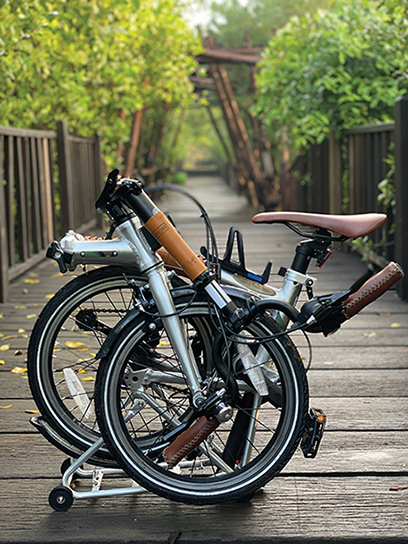
Kemp cited how in the bike industry, there is plentiful choice of aluminium to choose from at the design stage, however mixing and matching these different grades can cause recycling difficulties at the end of a product’s life. “If you start going for the weird, rare and exotic trying to save that extra 0.2% of weight, you are limiting the potential of recycling downstream,” he said.
Speaking from Eurocell’s perspective, Gaspar added, “our products are fully recyclable and are designed to be disassembled easily.” Eurocell’s products, such as windows, doors and cladding, are constructed of 32% recycled content, which can be recycled up to 10 times. For a product with a 20 to 30-year lifecycle, this gives the material a very long life.
A lingering preconception around sustainable materials it that they add large costs to the manufacturing process. Morris asked the panel how their businesses remain profitable despite this.
Despite the initial large investment Eurocell required to upgrade from 19% recycled materials to now 32%, Gasper reported the companies KPI’s are all still profitable.
Although, not passing on the costs of investing in new processes was a challenge for Brompton Bicycles. The brand’s reputation means customers expect it to use sustainable practices, so in order to maintain sales the company must move in this direction, Kemp said, “leadership is absolute, if you don’t have someone at the top saying ‘Yes, I believe it resonates with our company’s values’ then its dead in the water.”
CHALLENGES AHEAD
According to Kemp, Brompton Bicycles’ biggest limitation when implementing circular economy practices is the transition phase. Having recently introduced 100% post-consumer recycled wheel rims, the company had to learn far more about the value chain of the product compared to previous processes. “Ordinarily, we would order this particular shape, send it off to a rim manufacturer, and it would turn up,” Kemp explained. “Instead, we got involved right down to the scrapyard, where the material came from.”
SUPPLY CHAIN CONSIDERATIONS
Gasper has built a network across the UK, including a service where Eurocell will collect windows from customers’ homes for recycling, and recycle centres where the company can buy 300 tonnes of material, allowing it to operate across the UK. “One of our biggest challenges is to collect the performance-fit stock material,” she said. “Performance-fit stock is a challenge because there’s lots of variations, such as construction, waste management and scrap metal dealers.”
Education remains an issue not just for consumers, but for supply chains, as Brompton Bicycles discovered. Having strong supply chain relationships can help alleviate some of the issues, allowing for processes to be established. “We found the problems came from not where we were expecting,” Kemp added. “The postconsumer recycled metal we expected to cause all the problems, it didn’t. It was the little add-on processes.”
As such, Brompton Bicycles has changed some of its add-on processes to align with its new materials.
According to the panel, efforts to become carbon neutral and use responsible, reusable materials comes with its challenges. Changing production methods and material sources has its associated costs, along with the disruption of supply chains having to adapt to new demands. However, the payoff can be worth it. Having established sustainable practices allows companies to operate knowing material shortages and new legislation should not affect them, keeping operations flowing and establishing strong supply chains to protect against an uncertain future.