The project will allow uncrewed vessels to communicate the same way a human operator would
Marine AI, a Defence and Security Accelerator (DASA), have launched a first-of-its-kind research project that gives uncrewed vessels the ability to communicate with other ships, with trials taking place in Plymouth and Portsmouth
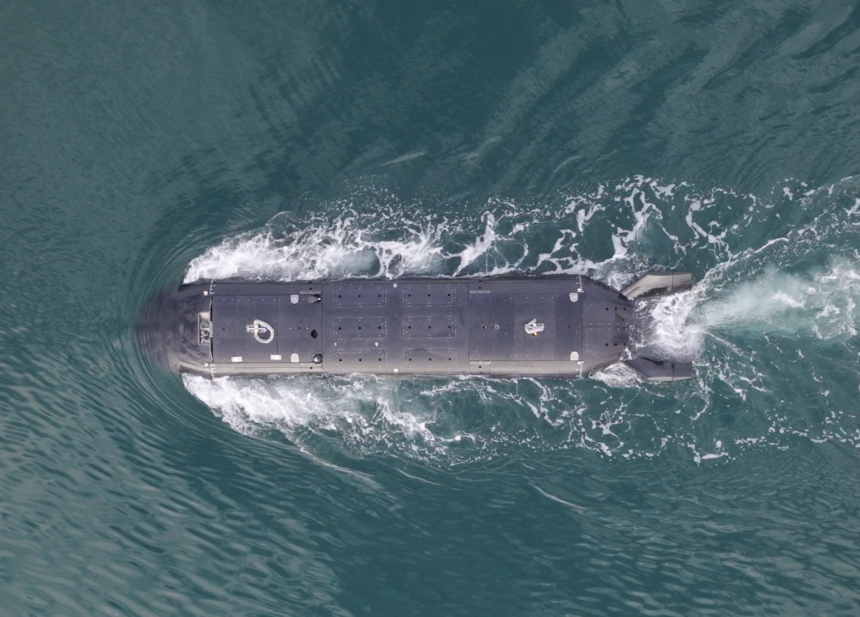
The project advances on Marine AI's proof-of-concept work with large language models (LLMs) to create an autonomy system that can understand and generate natural language. Supported by DASA funding, the latest phase will develop the technology, testing it in real-world maritime environments by making it possible for uncrewed surface vessels (USVs) to communicate with both crewed and uncrewed platforms in the same manner as a human operator.
Autonomous platforms are becoming increasingly popular, but the lack of seamless communication between them and conventional shipping is an operational challenge.
Presently, USVs are dependent on either structured protocols or human oversight, restricting their ability to react in complex and fast-moving scenarios. This project aims to bridge this gap by demonstrating that an uncrewed vessel can facilitate a natural language exchange that is context-aware, situationally appropriate, and trusted by mariners.
Tests will be utilising Marine AI's Oceanus12 vessel and supporting craft alongside platforms like the Patrick Blackett and XV Excalibur. Every response the system generates is to be assessed by master mariners, and findings will be captured in a formal evaluation report.
Oliver Thompson, technical director at Marine AI, said: “Uncrewed platforms can only operate safely alongside conventional vessels if they can be understood. This project is about proving that an autonomous system can use natural language in a way that makes sense to mariners in real-world conditions.”
If the test is deemed a success, the research will deliver the first demonstration of natural language interoperability between uncrewed and conventional platforms, making it possible for safe mixed-traffic operations to occur at sea.