
Practical skills are most easily gained through real-life scenarios
By nature, mining is an ever-changing industry that attracts proactive learners.
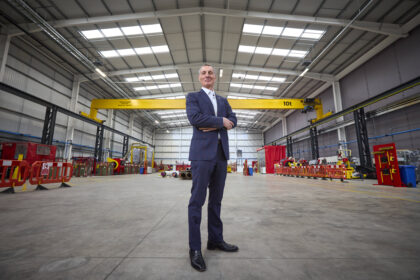
The industry’s practical skills are often most easily gained through real-life scenarios. Scottish hauler manufacturer Rokbak follows this approach, with its training happening on the workshop floor with tools in hand.
Rokbak’s aftermarket training manager Tommy Moore has moulded the programme according to his own training journey, which began on the assembly line physically building haulers.
“You can talk all day pointing to a picture, but it’s not the same as walking a group of technicians over to a machine, showing them the component and demonstrating how it works right there in front of them,” Moore says. “When we discuss a part of the truck, we work on that part. We have a full workshop here at our headquarters in Motherwell, Scotland, where we can strip a machine down and rebuild it. That’s how people truly learn.”
Moore moved into mechanical engineering, rewriting the standard operating procedures for building trucks. This gave him a granular understanding of every nut, bolt and system and cemented his appreciation for experiential learning.
Tailored training
Rokbak training programmes are tailored to each participant. The four-day courses, complete with a test track, are held at the Motherwell facility. Moore and his colleagues often contact participants in advance to understand any specific issues they are facing, allowing them to set up practical demonstrations to solve real-world problems.
“Being able to physically strip down an axle or transmission and have technicians get their hands on it is something we are very fortunate to be able to do,” says Moore. “We want them to leave here 100% comfortable with the truck.”
Seeing the savings
In addition to familiarising learners with the workshop floor, a practical training programme also relieves pressure from consumable parts, thereby saving money.
“If an operator isn’t using the retarder correctly, they can burn through a set of brakes three times quicker than they should. By teaching them certain driving techniques, we save the customer money and keep their truck running,” says Moore. “A big part of our training is showing field engineers and operators how to use the truck’s technology properly, like the retarder and gear-changing techniques.”
Speaking the same language
An aspect of practical training Moore finds particularly useful is that it gets industry players, regardless of background, language or culture, on the same page.
“You can’t keep a group of 15 technicians interested with a presentation in a meeting room, especially when there might be some language barriers,” he says. “But get them out on the iron, doing tests, checking pressures and diagnosing issues together – that’s a language everyone understands.”
While the mining industry faces its share of challenges, hands-on training is rewarding when the time and resources are applied.
For more information, visit: www.rokbak.com