Highlighting the potential of dry magnetic separation in iron ore processing
Magnetic separation plays an important role in iron ore processing, particularly as the mining industry looks to improve efficiency while reducing environmental impact. From tramp metal removal to dry beneficiation, developments in high-intensity magnetic separation enable new approaches to ore upgrading without reliance on water.
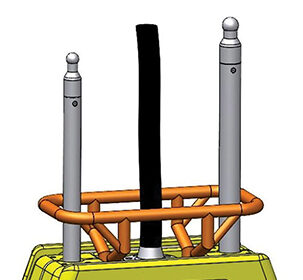
At the front end of iron ore processing, tramp metal removal is critical. Large ferrous objects such as digger teeth or hand tools can cause catastrophic damage to jaw and cone crushers. High-powered electro overband magnets are commonly used ahead of crushing stages to capture this material, protecting downstream equipment, maintaining operational continuity and reducing the risk of costly unplanned maintenance.
Another major driver for innovation in iron ore processing is water reduction. An estimated 2,000-5,000L of water is used per tonne of iron ore produced. A significant portion of this consumption occurs during concentration and beneficiation. As water scarcity and environmental pressures increase, dry processing flowsheets are emerging as a viable alternative.
Recent work with global mining companies and research institutions has focused on developing dry processing flowsheets using high-intensity magnetic separation. Test work conducted at Bunting’s customer experience centre in Redditch, UK, has involved concentrating ores and tailings across a range of size fractions using multi-stage magnetic separation, allowing assessment of where individual separator technologies perform most effectively.
Approaching coarse material
For coarser material in the 25–50mm size range, a combination of a rare earth permanent drum magnet and a high-intensity separation conveyor (HISC) has proven effective as a pre-sorting stage. This approach increases the iron content of material sent for further size reduction. The rare earth drum utilises a permanent magnet system mounted within a rotating stainless-steel drum, with a 180° magnetic arc creating distinct magnetic and non-magnetic zones. In testing, top feeding enabled clean separation of magnetic material.
Material then passes to the HISC, which uses a high-powered permanent magnetic head pulley with a specialised pole arrangement to generate high magnetic peaks on the belt. A thin, robust belt design keeps the product stream close to the magnet, maximising separation efficiency. Across all samples tested at this size range, this method improved iron content and reduced the volume of inert material reporting to further comminution. The same approach was also effective in tailings applications, separating higher iron content material from lower-grade streams.
A solution for intermediate sizes
For intermediate sizes between 1-5mm, a multi-step process using a rare earth drum followed by a rare earth roll separator was applied. The rare earth roll is a conveyor-based separator featuring a tightly spaced pole configuration that produces a steep magnetic field gradient. Combined with a thin Kevlar belt, this design is well suited to separating weakly magnetic and paramagnetic materials.
Rare earth rolls are widely used in silica sand processing to remove fine iron contamination and paramagnetic minerals. Testing has shown that they are also effective in iron ore beneficiation, particularly as reduced particle size improves mineral liberation but demands higher magnetic field strengths for efficient separation.
Even the finest particles
At below 1mm, testing focused on two electromagnetic separator types that delivered similar performance, allowing flexibility in equipment selection depending on application requirements.
The first is the magnetic disc separator, where material is conveyed beneath up to three rotating discs. Each disc is energised by two electromagnetic coils, inducing a magnetic field that lifts weakly magnetic and paramagnetic particles from the belt. These particles are discharged once the disc rotates out of the magnetic field. The dual-coil design and adjustable configuration allow highly selective separation, with up to seven distinct product streams possible depending on disc arrangement. This technology is widely used in mineral processing, particularly for mineral-rich sands, and is increasingly applied in the separation of rare earth minerals such as monazite. Testing with a single-disc unit produced three product streams with clearly differentiated iron content.
The second option for this size range is the induced roll separator, another electromagnetic system that uses a high-powered coil to induce a magnetic field into a castellated roll. The castellations generate a very high field gradient. Material is top-fed onto the roll, where weakly magnetic and paramagnetic particles are attracted and discharged from the magnetic field, while inert material falls away immediately. Induced roll separators are well established in the mineral processing industry, particularly in silica sand applications. Test work demonstrated the ability to produce iron-rich and predominantly inert product streams in a single pass, with multi-roll configurations enabling multiple passes within one machine.
A sustainable future
As the iron ore industry continues prioritising sustainability, dry magnetic separation can reduce water consumption while maintaining or improving beneficiation performance. Ongoing test work and flowsheet development demonstrate how different magnetic technologies can be applied across particle size ranges to support more efficient and environmentally responsible iron ore processing.
For more information visit: https://buntingmagnetics.com