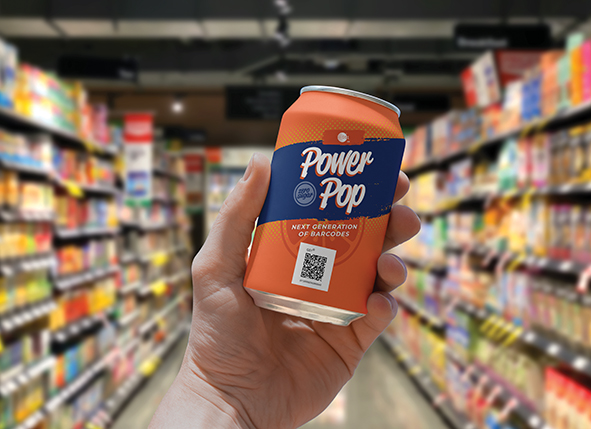
The next generation of QR codes for retail products contains detailed and dynamic information that can be easily accessed. Nicola Brittain explores what this means for retailers, consumers and the environment
Consumers want to know more and more about the products they buy, and this doesn’t just apply to the isolated products themselves but rather their position within the wider ecosystem of waste, health, or consumer trends. This desire runs alongside a push for reduced packaging meaning that there simply isn’t the space for the information required to be written on the box, bottle or other packaging as might have happened in the past.
This is where a new QR code, being powered by standards body GS1 UK looks set to be a gamechanger.
GS1 UK is working hard to convince retailers across the world to dump the traditional Universal Product Code – the well known black lines signifyer – and take up the GS1 QR code instead. The standard barcode currently used by retailers is a machine readable ‘Global Trade Item Number’ (GTIN) that contains a unique number, granted by GS1 and used to identify a specific product. The code contains, if required, the product’s batch number, serial number, expiration date, packaging date, net weight and country of origin. However its capacity for additional data is limited.
Camilla Young, programme lead for the next generation of barcodes from GS1 presented at the recent Process and Packaging and Machinary Trade Show (PPMA) on the reasons the body were pushing for uptake of the GS1 QR code. She said: “There are over 100 different application identifiers which can be added to the new GS1 QR code. This will be helpful for consumers, retailers and the environment.”
She continued: “The GS1 QR differs from a normal QR code that will typically just take you to one source of information on the internet, a kind of website or URL. With the GS1 QR code, however, a retailer can take this code (if the POS system has been updated) and read it as a normal bar code and then point it a host of additional information on the web.”
She continued: “This means a retailer can look up information about this batch in a web hosted environment and it can pull through all the information that is needed for that product.”
The body is pushing for the GS1 QR code to be made a universal standard by 2027.
What does the GS1 QR Code offer?
The most recent iteration of the GS1 QR code, updated in 2021, provides extensive product information, product history, certifications, carbon footprint, recycling information and more (see the boxout on page 10).
Consumer access
In addition, consumers can access the code with a standard smartphone, Once the data is added to the GS1 QR code, it can unlock a whole raft of additional consumer information such as recipes, nutritional information, tailored offers and promotions, and more. The code can also change the language depending on where someone’s scanning to enable more efficient sharing of data.
WhAT IS GS1?
GS1 is a standards body that has been using bar codes to streamline the way people live and work for 50 years. The company has 60,000 members, 76% of whom are from the retail industry. GS1 barcodes allow stakeholders across a broad range of industries to uniquely identify, describe and track their products, creating greater trust in data generally, according to the organisation.
Information to help the environment
As Camilla explained the type of information consumers want about their products has changed significantly. Such information will now include how packaging can be recycled, whether it is responsibly sourced and whether it is safe to consume. In terms of recycling, the GS1 powered QR codes can help prevent people disposing of packaging. They might, for example, be put on reusable containers and linked to return points, with individual cups linked to each user, engaging and incentivising them to return their cup for reuse.
AI input and dynamic information
The GS1 QR code works with AI to help deliver important information to consumers, AI’s ability to quickly pull together related information means QR codes can be far more dynamic than they once were, meaning they can be updated when new relevant information is released or when products hit a threshold such as a best before or sell by date for example. This helps with traceability, automated markdown, inventory management, recalls, anti counterfeiting, and digital deposit return schemes.
Building the code
So what practical steps will a retailer need to make to begin using the GS1 powered QR code? First they will need to feed the relevant data from their internal systems into the software they use to generate the code. Second, this data generates a unique QR code – the retailer or QR code generator will need to check the dimension and error correction for this. Third, QR codes must be printed inline and the user will need to work closely with their print hardware supplier to ensure this is done accurately and according to standards. Finally, suppliers will need to verify the codes to ensure correct data is encoded and that they meet the agreed standards.
For more information visit: www.gs1uk.org