We caught up with Dinko Cudic, head of marketing and applications development at Henkel Adhesive Technologies to discuss offshore asset integrity, the challenges that keep operators awake at night and what decades of infrastructure protection and repair have taught us.
From FPSOs and offshore platforms to pipelines and refineries, energy infrastructure operates in some of the harshest environments on earth. Constant exposure to saltwater, changing temperatures, UV radiation and mechanical stress means operators are in a continual battle against degradation.
As operators look to maximise value from existing assets while maintaining safety and reliability, asset integrity has become a bigger part of the conversation. We explore some of the key challenges facing operators today and how proven protection and repair technologies can help.
Q: Offshore assets operate in some of the harshest environments on the planet. What challenges do operators face today?
Offshore assets have a hard life. Whether it’s a platform in the North Sea, an FPSO off the coast of South America or a refinery in the Middle East, the environment is constantly working against you. Saltwater, humidity, UV exposure, temperature fluctuations and mechanical stress all contribute to degradation over time.
Then there is the practical reality of maintaining these assets. Access can be difficult, shutdown windows are often limited and any maintenance activity needs to be carefully planned around ongoing operations.
The challenge for operators is finding the right balance between reliability, safety and cost, while keeping critical infrastructure performing exactly as it should.
Q: Has the conversation around offshore integrity changed in recent years?
Absolutely. Historically, many conversations focused on identifying damage and deciding how best to repair it. Today the industry is taking a much more proactive approach.
Operators are asking different questions. How can we prevent degradation before it becomes a problem? How can we reduce future maintenance requirements? How can we maximise the value of assets already in service?
Those questions are becoming increasingly important as companies look to optimise operational expenditure while ensuring long-term reliability.
There is also a growing recognition that protecting and repairing infrastructure is more practical and sustainable than replacing it entirely. Clients are not looking for temporary fixes. They need solutions that can withstand the realities of the operating environment and continue performing long after the repair team has left site.
Q: What role do composite repair systems play in modern offshore operations?
Composite repair technologies have changed the way many operators approach asset repair. The ability to restore compromised infrastructure without major replacement activities offers significant advantages, particularly offshore where access, logistics and downtime can all present challenges.
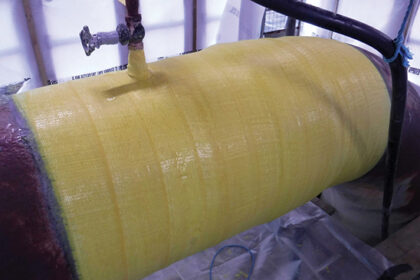
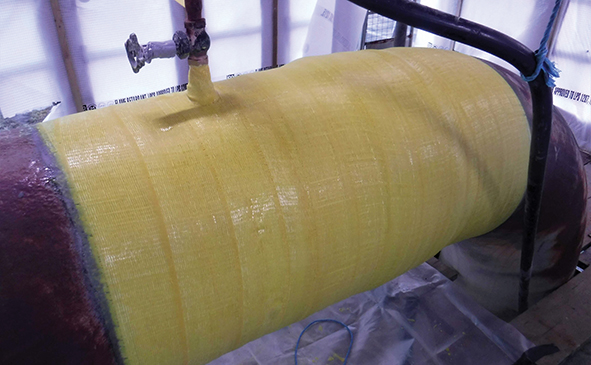
One example involved an FPSO where deteriorated pipework required intervention to restore safe operation. Taking large sections of pipework out of service would have resulted in considerable disruption, so a composite repair solution using ThermoWrap MT from CSNRI was installed to restore integrity and return the asset to safe operation.
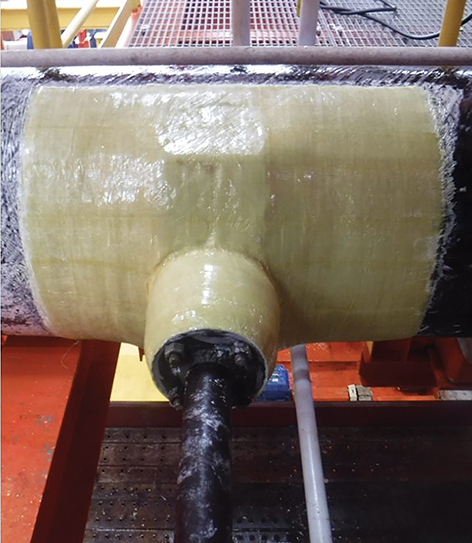
What makes projects like this particularly valuable is not just the repair itself, but the ability to complete it efficiently, safely and while supporting continued operations. The fact that composite repairs can often be carried out without hot work requirements can help reduce risk to both personnel and production, while minimising operational disruption.
We’ve seen similar challenges elsewhere. In the North Sea, an ageing pipeline system was experiencing corrosion-related issues that threatened long-term reliability. Rather than pursuing a costly replacement programme, an engineered composite repair solution was used to restore structural integrity and support continued service.
These projects demonstrate how repair technologies are helping operators address real-world challenges while extending the useful life of critical infrastructure.
Q: Corrosion remains one of the industry’s biggest concerns. Why?
Because corrosion never takes a day off. It’s easy to think about corrosion only when it becomes visible, but by that point the process has often been developing for some time. Offshore environments create ideal conditions for corrosion to develop, particularly where moisture, oxygen and salt are present. Add continual exposure to UV radiation and the challenge becomes even greater, placing additional demands on coatings and protection systems designed to safeguard critical assets.
The biggest change we have seen over the years is the industry’s approach to protection. Rather than waiting for degradation to become evident, operators increasingly want systems that prevent corrosion from developing in the first place. This is particularly important in areas where corrosion can remain hidden for extended periods, such as under insulation. The right protection strategy can help reduce maintenance requirements, improve predictability and lower overall lifecycle costs.
It’s all about staying ahead of the problem rather than constantly reacting to it.
Q: Are there particular areas of offshore infrastructure that demand special attention?
Splash zones remain some of the most challenging environments anywhere in the oil and gas sector. These areas are constantly exposed to seawater, changing tides, abrasion, impact from vessels and debris, as well as salt exposure. They also experience continuous wetting and drying cycles. It’s a combination that accelerates deterioration and creates significant maintenance challenges.
This is where selecting the right corrosion prevention system becomes particularly important.
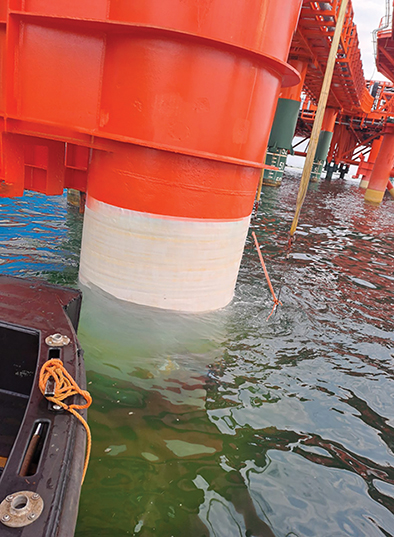
A recent example is the Petra platform in the Adriatic Sea, where corrosion protection from STOPAQ was applied to 36 platform legs supporting Italy’s new floating LNG terminal. Operating in submerged and splash-zone conditions, the project demonstrates the importance of selecting proven protection systems capable of delivering long-term performance in harsh offshore environments.
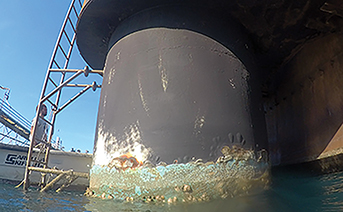
The same challenges are not limited to offshore platforms. Jetties and terminals face many of the same conditions, with operators often battling corrosion on assets exposed to seawater and changing tidal conditions. In one jetty project, STOPAQ Wrappingband solutions were selected following premature coating failure, providing a practical long-term solution that could be installed while operations continued.
Q: Looking ahead, what should operators be thinking about?
The biggest opportunity is taking a lifecycle view of infrastructure.
Asset integrity should never be considered only when a defect is identified. The most successful operators look at the bigger picture, considering how corrosion prevention, inspection, maintenance and repair strategies work together throughout the life of an asset.
Every asset has its own challenges. Success comes from understanding the operating environment, selecting technologies with proven track records and taking action before small issues become larger problems.
Whilst the challenges may change, the fundamentals remain the same. Operators need safe, reliable infrastructure that performs as expected, often in environments determined to do the opposite.
Asset integrity is rarely about responding to a single issue. More often, it’s about making the right decisions long before a problem has the chance to develop.
Whether protecting offshore platforms, restoring FPSOs, reinforcing pipelines or preventing corrosion in splash-zone environments, the objective remains the same: keeping critical energy infrastructure operating safely, efficiently and reliably for decades to come.
For more information visit: www.henkel.com