Hivekit has launched OPS.AI, a new technology that can proactively coordinate and optimise mine operations, identify bottlenecks, answer operations questions and execute authorised directives
Early tests against historic mine operations data have demonstrated a 21% improvement in compliance with plan, alongside improvements in the utilisation of existing resources.
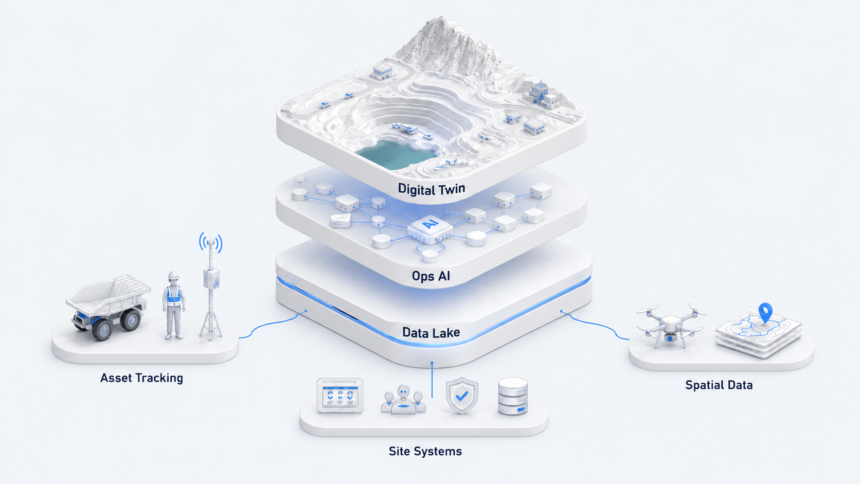
These efficiency gains are achieved by OPS.AI by connecting the mine’s strategic and production plans with day-to-day operational execution. It can set high-level production goals and operational steps, as well as take into account the site’s entire operational context, including asset tracking and performance metrics, and geospatial information and data from systems such as ventilation, dewatering, and maintenance.
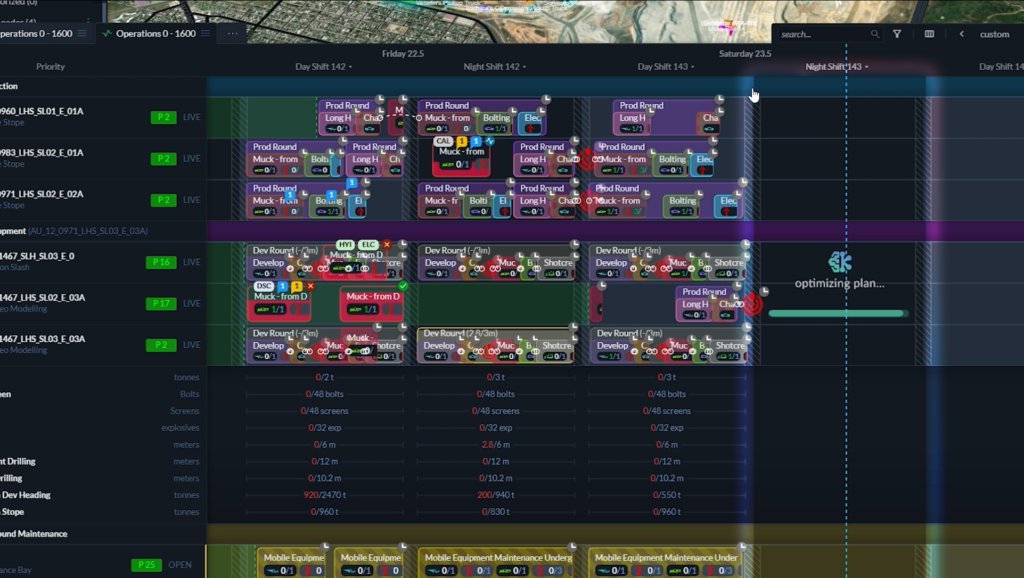
Having a holistic, real-time view of the operation enables OPS.AI to plan around actual resource availability, identify correlations, constraints, and bottlenecks, and adjust shift goals and production cycles to real-world conditions.
This helps to create an optimised, dynamic shift plan that takes the mine’s goals and its current operational situation into consideration. OPS.AI can assign tasks, cycles, and targets, and allocate people, vehicles, and other resources accordingly.
Human supervisors still remain in control, with any changes or adjustments made by supervisors being fed back into OPS.AI, which then replans around them. Similarly, as ground conditions change, trucks break down, employees become unavailable, or ventilation systems fail, OPS.AI can adjust the operational plan accordingly.
Wolfram Hempel, CEO at Hivekit, said, “Mine plans are built around assumptions about equipment, people, infrastructure and conditions, but the reality underground or in the pit changes constantly. OPS.AI continuously reconciles what was supposed to happen with what is actually happening and helps the operation determine what should happen next.”
All proposed plans and actions are secured by a deterministic constraint layer, a checkpoint designed to offset the inherent uncertainty of AI systems. OPS.AI checks proposed plans against operational rules and constraints, including safety requirements, mandatory break times, ventilation restrictions, equipment limitations and site-specific operating rules.
A proposed plan is automatically rejected before it can be presented or executed if it violates a constraint. AI proposes; deterministic rules validate; authorised personnel remain in control.
In addition to planning and replanning, OPS.AI includes an operational Copilot for mine managers, supervisors, and dispatchers.
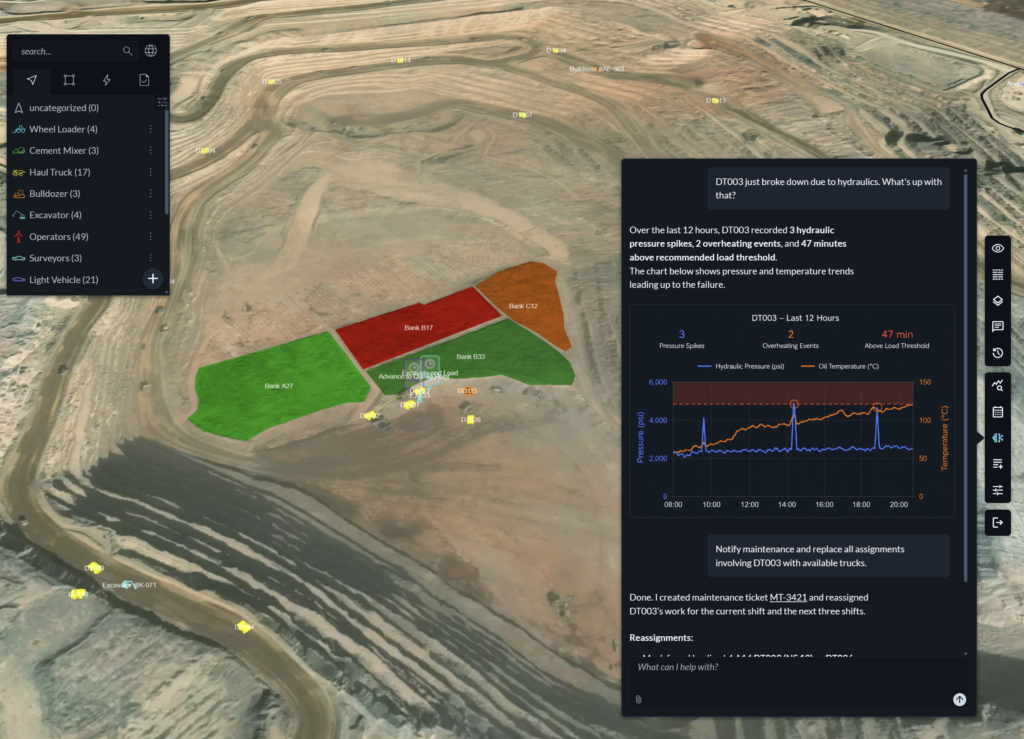
Users are able to ask questions such as “How many tonnes have we lost due to the ventilation system breakdown?” and “What is the total output of all headings on Level 12?”
Instead of being solely reliant on a language model to produce an answer, the Copilot understands the structure and nature of the operational data available within the Hivekit platform. It translates questions into queries against the underlying data, interprets the results and presents them to the user through answers, tables and visualisations.
The Copilot can also take action. Within their existing permissions, authorised users can issue operational directives. OPS.AI translates these instructions into actions within the underlying operational system while applying the same permission, validation, and constraint layers used in the platform.
OPS.AI is available as part of the wider Hivekit platform, which provides the operational data foundation and digital twin by aggregating, processing and visualising information from across the mine.