The collaboration will test hybrid powertrain solutions for challenging transport applications
Scania has chosen Horse Powertrain to deliver its advanced range-extender system for the pilot vehicle, currently operating as a heavy-duty timber truck in Sweden. The collaboration will be an opportunity to test hybrid powertrain solutions for challenging transport applications, such as forestry logistics
The pilot is part of the Scania Pilot Partner program operating in Sweden under SCA, a European forestry company.
The vehicle is designed to handle Sweden's challenging timber routes, transporting heavy loads through steep and remote terrain where access to charging infrastructure is limited. By combining a powerful battery-electric drivetrain with the generator created in Sweden by Horse Powertrain's division Aurobay Technologies, the truck can achieve long-distance capability and reduced CO₂ emissions.
The test route is 16km with an operational target of completing seven to eight rounds a day, comparable to a diesel truck and providing slightly higher productivity than a pure battery-electric truck due to avoided charging downtime.
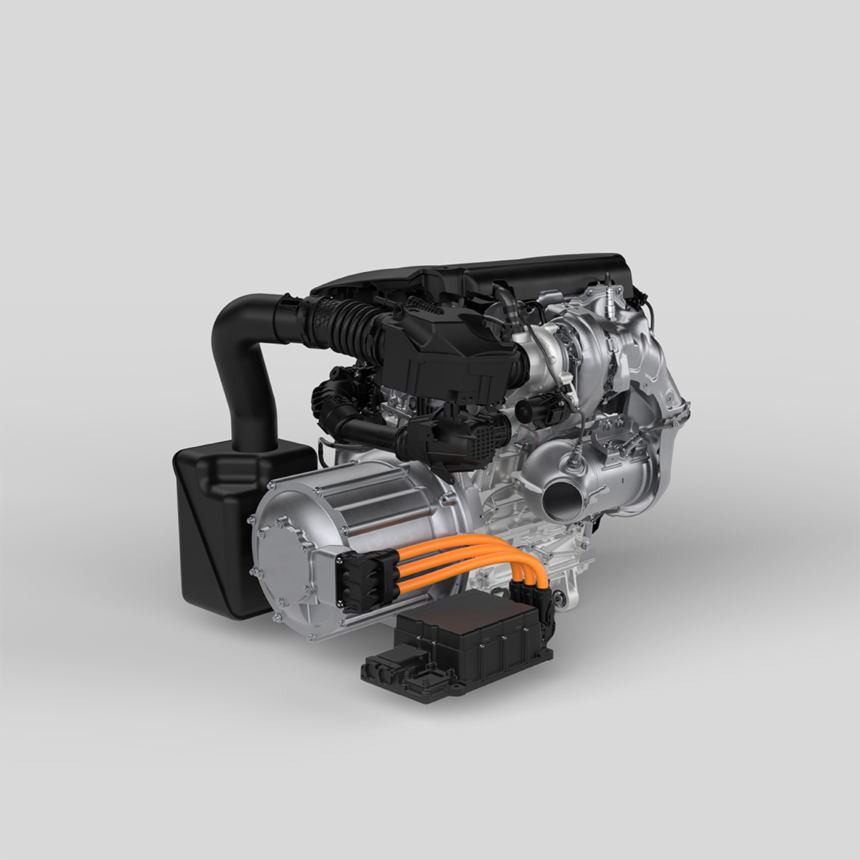
The configuration supports the truck's battery packs with a 120kW range-extender unit based on Horse Powertrain's 2 litre high-efficiency multi-fuel engine. The unit supplies electric energy when required, acting as an onboard charger.
Matias Giannini, CEO at Horse Powertrain, said, "Forestry logistics represents one of the toughest challenges for electrification. The forest roads of northern Sweden demand strength, range and reliability. Charging stations are few, but the timber never waits. You can think of our range extender as a power bank for a heavy-duty truck: silent, efficient, and always there when you need it. By partnering with Scania and drawing on our engineering excellence, we’re proving how a compact, high-efficiency range-extender enables electric trucks to operate reliably in the most demanding environments. It’s a technology that cuts CO₂ now."
Tony Sandberg, vice president at Scania Pilot Partner, said, "What we’re doing in Sweden with Horse Powertrain and SCA builds directly on the 100-day trial we ran together with a logistics partner in Germany earlier this year. That vehicle logged almost 22,000 kilometres and drove more than 90% of the time on pure electric power, only using the range-extender when no charging was available. The result was a CO₂ reduction of over 90% compared with a diesel truck. Those learnings give us a strong foundation as we tailor the system for demanding Nordic timber operations."
Ingo Scholten, chief technology officer at Horse Powertrain and managing director Sweden, Aurobay Technologies division, said, “Electrifying heavy-duty routes means understanding what drivers and operators face hour by hour. Long stretches without charging, variable loads, and rapidly changing weather. This pilot lets us study those realities directly in day-to-day timber operations. The range-extender’s role is simple. Provide a stable, efficient energy supply so drivers can complete their full shift without interruption and with far lower greenhouse-gas emissions than a traditional diesel truck. The data we gather here will guide how we refine the technology and scale it for wider use across demanding transport applications.”
Horse Powertrain's modular range-extender architecture expands on the core technology utilised in its passenger-car and light-commercial hybrid systems, adapted for the higher power output and durability demands of heavy-duty applications. Differing from conventional fixed-speed generator sets, the engine can operate across its full power band, enabling the system to provide the required output while keeping fuel consumption, noise, and vibration low.
The pilot truck is undergoing testing in regular operations, carrying full timber loads to collect performance and efficiency data in real-world conditions. The results will help future deployments of electrified powertrains in the forestry sector and other heavy-duty applications.