


Preventing storage systems from failing is crucial to prevent blackouts
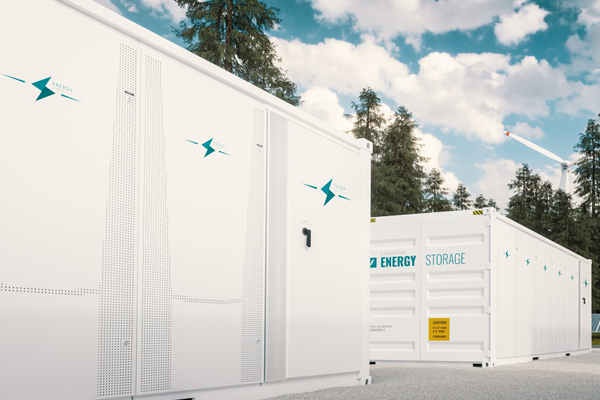
Energy infrastructure around the world is evolving, with power companies and governments implementing new features to support alternative energy sources, and battery energy storage systems (BESS) are at the centre
Storage systems play a critical role in energy infrastructure, necessitating reliability. If they were to fail on a low production day, the consequences could lead to rolling blackouts across an entire region. It is this importance that has resulted in the enclosures that safeguard these systems needing to meet strict standards, ensuring users can be sure their BESS can cope with harsh environmental conditions and safely contain failures as and when they occur.
For an enclosure to pass testing, each component must be trusted not to fail. Standards, considerations, environments and the hardware best for them, include:
Water, dust and corrosion
UL 50E examines gasket compression, fastener performance, and other factors protecting an enclosure from elements such as water, pollution, dust, and corrosion.
An enclosure's most vulnerable part is its doors and access panels, meaning designers need to choose the proper hardware so that their enclosures can meet the standard. Selecting a strong compression latch and gasket is the most reliable way to meet this standard.
It is essential to consider that the larger and thinner the panel, the more likely it is to flex under compressive force, which can result in small gaps between the panel and gasket. A multi-point compression system prevents this from happening by providing simultaneous compressive force at various points across the panel's edges, thereby reducing the room for dispersion and flex before another latch reinforces it.
Even if an enclosure is sealed against water and dust, that protection will not last forever if the hinges on the panel are unable to handle the conditions.
Fine particle and water jet protection
IP65 is a vital rating to achieve in environments with fine particles like sand or dust in the atmosphere. These particles can cause abrasive wear for hinges and moving parts, reducing their lifespan and hindering smooth operation. This rating also resists low-pressure water spray, ensuring installations near open water also have some protection.
For applications requiring additional protection from water, IP66 devices resist strong water jets, including heavy rain, hoses, and waves. For outdoor industrial equipment, this rating is preferred.
The Southco F2 Compression Latch System is designed to meet these ratings, protecting BESS enclosures from the elements.
Explosion protection
Regulations specific to explosion resistance are uncommon, but could be the most essential quality in a battery enclosure. Other regulations are working together to prevent an arc explosion from occurring, but in the event of catastrophic battery failure, the enclosure and its door are the final line of defence between contained damage and total system collapse.
This is a situation where the correct access hardware is critical. Panels are the only features on the enclosure designed to open, making them the most likely point of failure, so they need to be secure.
To achieve this, manufacturers need a trusted partner to aid in developing a strong, reliable access system for their panels. The forces are so strong that a standard latch may not be enough; some systems have a series of sturdy hooks that latch into the frame to disperse energy throughout the enclosure without breaking.
Fire protection
UL 94 covers flammability for certain plastics based on their burning behaviour. With so many battery enclosures close together, if one fails, the surrounding enclosures need to be protected. Damage from a fire in a single enclosure can damage surrounding ones, creating a chain reaction that harms the entire system.
In terms of flammability, the gasket is the most likely point of failure, so it has to withstand the heat of battery failure. It is vital to ensure gaskets in electrical enclosures are durable enough that fire and heat don’t escape through gaps in the access panel.
Monitoring and security
As well as environmental considerations, designers need to prepare for the human factor. BESSs are usually built in remote locations without a consistent human presence monitoring them. This means it comes down to hardware to prevent passerbys or even vandals from entering.
One of the best ways to prevent forced entry is with a multi-point latching system, the same kind that achieves UL50 E compliance and explosion resistance.
In remote locations, electronic monitoring and access control can be a significant asset by using monitoring hardware with integrated sensors or remote access sharing. The Keypanion App from Southco is a tool to get started with wireless access sharing and tracking, to know exactly who has accessed your equipment, and when.
The future of energy
The renewable energy industry is expanding, but BESS are in their infancy compared to traditional energy infrastructure. At this point, reliability is the most crucial factor to earn public trust.
This means that every component of the enclosure needs to withstand the environment in which they are placed over time, from the latch to the hinge. The security of the entire structure can be compromised if even one part of the enclosure fails.
Phil Taylor, Southco business development manager, said, “Energy infrastructure is evolving fast, and our previous experience in infrastructure improvement has emphasised the importance of reliability, resilience, and high performance in new technologies.”





You reported that fantastically!