Material innovation has become a defining competitive advantage in the automotive sector
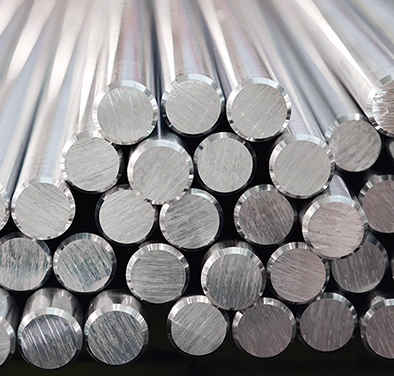
As the automotive sector accelerates toward a lighter, cleaner, and more circular future, material innovation has become a defining competitive advantage. Aluminium — already central to vehicle weight reduction and efficiency — is taking on an even more strategic role as new European regulations redefine environmental performance standards. At the forefront of this transition is Eural Gnutti, a leading manufacturer of drawn aluminium bars for mechanical processing and a major European producer of extruded bars and profiles
Founded in 1968 in Rovato, Italy, Eural Gnutti operates production sites in Rovato and Pontevico, with 416 employees and 2023 revenues of €310 million. Backed by a growing international presence in the US and Germany, the company continues to lead the evolution of lead-free, high-performance aluminium alloys that align with both engineering excellence and environmental responsibility.
ANTICIPATING THE NEW ELV REGULATION
The forthcoming End-of-Life Vehicles (ELV) Regulation, expected to enter into force in late 2027, represents a major evolution in how vehicles are designed, built, and recycled. The updated framework reduces the allowable lead content in automotive materials from 0.4% to 0.1%, tightening compliance thresholds and requiring full lifecycle accountability from manufacturers.
Beyond emissions and recyclability, the new regulation links vehicle production directly to the circular economy, mandating design strategies that prioritise reuse, recovery, and traceability of raw materials, including aluminium. Automotive manufacturers must therefore depend on suppliers capable of delivering both technical performance and regulatory assurance across the value chain.
ALUMINIUM FOR LIGHTWEIGHTING AND CIRCULARITY
Aluminium’s combination of lightness, strength, and recyclability makes it indispensable for sustainable vehicle design. Replacing steel with aluminium can cut component weight by around a third. For every 100 kilograms removed, manufacturers can save roughly 3.5 litres of fuel per 1,000 kilometres, equating to a reduction of two tonnes of CO2 over a vehicle’s lifetime.
Eural’s expertise in advanced alloys directly supports this shift. Its products are already integral to critical safety and performance systems — from transmission components and clutch actuators to braking, steering, and airbag mechanisms. The company’s extruded profiles are also widely used in heat exchangers, pump bodies, bushings, and anti-vibration systems.
6026LF: THE LEAD-FREE ALTERNATIVE
Eural’s flagship innovation, the 6026LF (Lead-Free) alloy, sets a new benchmark for machinable, sustainable aluminium. Developed as a direct substitute for the conventional 6026 and 6064A alloys, 6026LF delivers comparable mechanical strength, excellent chip formation, and high surface finish quality, even after hard anodising.
Already validated by automotive OEMs, the alloy combines precision machinability with full compliance to the revised ELV requirements — offering manufacturers a future-proof solution for applications such as braking systems, safety assemblies, and high-pressure components. “Its mechanical properties, combined with the absence of lead and full compliance with new regulatory requirements, make it a reliable and sustainable alternative,” explains Paolo Pilato, sales manager at Eural.
TRACEABILITY AND RESPONSIBLE SOURCING
Eural Gnutti ensures complete traceability through the International Material Data System (IMDS), now mandatory across the automotive supply chain. In parallel, the Supplier Assurance portal monitors ethical and environmental performance, supporting due-diligence obligations under EU law. Reflecting its progress in sustainability governance, Eural’s ASI certification rating improved from D54 in 2023 to B80 in 2025.