The survey forecasts agentic AI adoption for 2026 and beyond
IEEE, a technical professional organisation committed to advancing technology for humanity, has released the results of "The Impact of Technology in 2026 and Beyond: an IEEE Global Study", a survey of global technology leaders from Brazil, India, Japan, China, the UK and the US
The study examines which technologies AI will have the most influence on in 2026; expectations for AI market growth, benefits, uses, and skills; and future technology trends.
Agentic AI and data analysts
Agentic AI can be used as a smart assistant, as it can work independently when given a task; however, its work still needs to be double-checked. Its adoption is on the rise, and 96% of technologists globally agree that innovation, exploration, and adoption of agentic AI will continue to accelerate in 2026, as established enterprises and start-ups deepen investments and commitments to the technology.
The rise of agentic AI will not be confined to just business, as respondents to the survey see it extending to mass or near-mass adoption by consumers in 2026 for uses including:
- (52%) Personal assistant, scheduler, family calendar manager
- (45%) Data privacy manager
- (41%) Health monitor
- (41%) Errand and chore automator
- (36%) News and information curator
91% also agree that the use of agentic AI to analyse larger amounts of data will grow in 2026, resulting in increased hiring of data analysts to assess the accuracy of results, identify vulnerabilities, and ensure transparency.
The survey found that the top skills technologists will seek in candidates they would want to hire for an AI-related role in 2026 are:
- (44%) AI ethical practices skills, +9% from the prior year
- (38%) Data analysis skills, +4% from the prior year
- (34%) Machine learning skills, +6% from the prior year
- (32%) Data modelling skills, including processing, no change from the prior year
- (32%) Software development skills, -8% from the prior year
Humanoid robots as co-workers
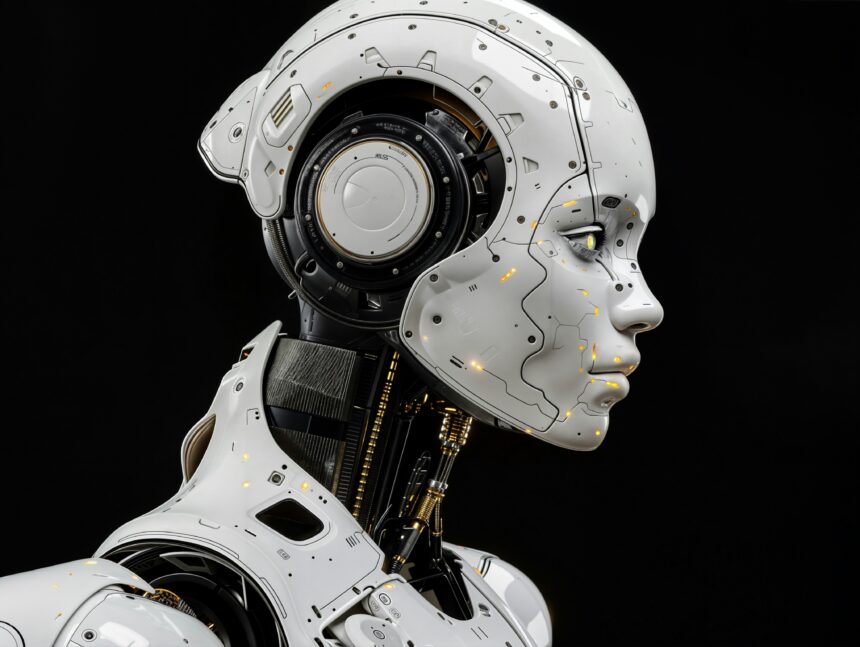
77% of technologists agree that the novelty of a humanoid robot could add some fun to the workplace, but that, over time, a humanoid robot could become a commonplace co-worker with circuits. Robotics is also a top area of technology, with 52% of technologists expecting AI to influence it in 2026.
Other areas to be influenced by AI in 2026 will include extended reality, such as augmented, virtual, and mixed reality, and autonomous vehicles. Whilst the top industries expected to experience the most significant transformation from AI in 2026 will be software, banking and financial services, healthcare, and automotive and transportation.
Policy and governance
Policy and governance related to when and how AI should be used depend on where it was built. When asked which statement best fits their organisation's stance on AI products, made by their company or by a third party, for work at their company, a majority of technology leaders selected:
- Full speed ahead: AI will be integrated throughout the organisation, and our use policies will align with any government regulations that exist or are enacted. (49% if company-built AI vs. 40% third-party-built AI)
- Everyone follows the rules: We will issue clear policies on when and how AI can be used. (26% company-built AI vs. 33% third-party built AI)
The stage technologies expect their organisation to be in the adoption of generative AI in 2026 has advanced, with:
- (39%) Using Regularly, But Selectively: Generative AI will continue to be a regular part of our work in selective areas, and it will add value. (+20% from prior year)
- (35%) Rapidly Integrating, Expecting Bottom-Line Results: AI will continue to be integrated across all our operations. We’ve already seen measurable bottom-line results and expect these to grow.
The top uses for AI applications technology leaders expect in 2026 include:
- (47%) Real-time cybersecurity vulnerability identification and attack prevention, -1% from the prior year)
- (39%) Aiding and/or accelerating software development, +4% from the prior year
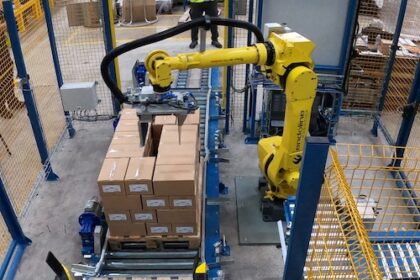
- (35%) Increasing supply chain and warehouse automation efficiencies, +2% from the prior year
- (32%) Automating customer service, +4% from the prior year
- (29%) Powering educational activities such as customising learning, intelligent tutoring systems, university chatbots, -10% from the prior year
- (23%) Accelerating disease mapping and drug discovery, -3% from the prior year
- (22%) Automating and/or stabilising utility power sources, -3% from the prior year
51% of those surveyed cited that 26-50% of jobs across the global economy will be augmented by AI software in 2026, 30% cited 51-75%, 16% cited 1-25%, and 4% cited 76-100%.
49% believe it will take up to five to seven years to build out the global data centre infrastructure needed to meet the rise in AI development and demand, whereas one third think it will happen sooner, within three to four years, and 10% think it could take eight to ten years or more.