
Canada’s Ring of Fire mineral district in Northern Ontario is becoming one of the most strategically important critical minerals regions in the world, but tapping into its potential will require mining companies to rethink project design from the earliest stages
According to Tas Mohamed, Railveyor chief executive officer, selecting lower-impact transport technologies in project planning could be pivotal to balancing economic development with environmental protection and Indigenous partnerships.
Mohamed emphasised that the Ring of Fire represents a strategic opportunity for Canada to reinforce its position as a reliable supplier of the nickel, copper, chromite, platinum, and other critical minerals needed for the global energy transition.
Mohamed said, “The Ring of Fire has the potential to enhance Canada’s role in global critical minerals supply chains. However, its remote location and environmentally sensitive setting mean that projects will need innovative approaches that reduce environmental impact while remaining economically competitive.”
Infrastructure investment
The region contains world-class mineral resources but presents considerable logistical challenges. New mining developments will need significant investment in transport infrastructure, while addressing the expectations of regulators, Indigenous communities and investors for responsible environmental stewardship. Mohamed argued that these factors are causing mining companies to evaluate alternative haulage solutions earlier in the project development process.
Mohamed said, “Technology decisions made during prefeasibility studies can have a profound influence on the long-term environmental footprint, operating costs and social acceptance of a mining project. Early consideration of alternative transport systems allows developers to optimise projects before major infrastructure commitments are made.”
The Ring of Fire is located in one of the world’s largest peatland systems, an ecosystem with a critical role in long-term carbon storage. The area is also governed under Treaty 9 and includes multiple First Nations with important stewardship responsibilities over the land and water. Mohamed said successful mining development depends on sound engineering and meaningful collaboration with Indigenous communities.
Mohamed said, “Mining projects must create lasting value for local communities through employment, procurement opportunities, construction participation and long-term economic benefits. Strong partnerships will be fundamental to responsible project development.”
Rethinking haulage
Environmental considerations are changing how mining companies assess traditional haulage methods. Mohamed shared that conventional diesel truck fleets often need extensive road construction across wetlands, which leads to deep ground preparation that increases capital expenditure and ecological disturbance. Long transport distances increase operating costs and expose mines to diesel price volatility and higher greenhouse gas emissions.
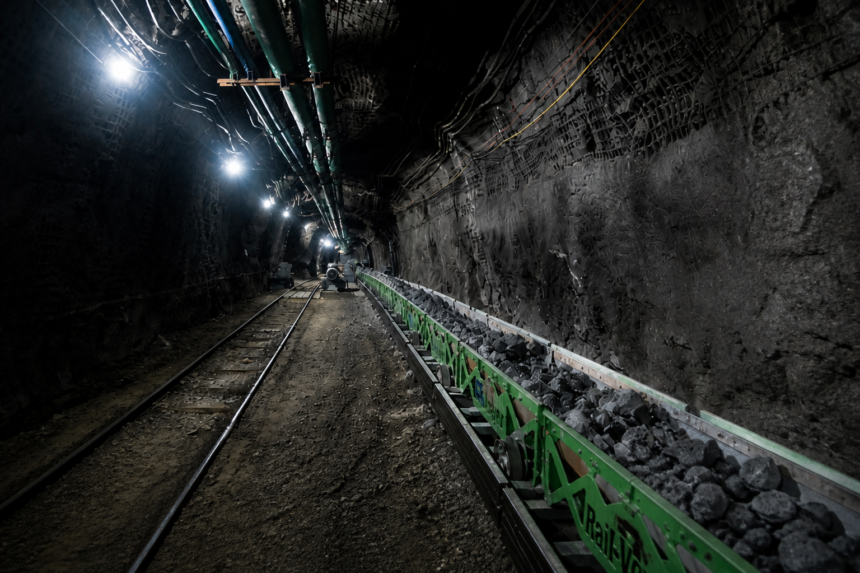
Mohamed argued that electrically powered transport systems provide an attractive alternative. Railveyor’s light-rail hybrid haulage technology has been specified on several Tier One mining projects under consideration in Northern Ontario, while similar systems are operating elsewhere in the world.

Minimising disturbance
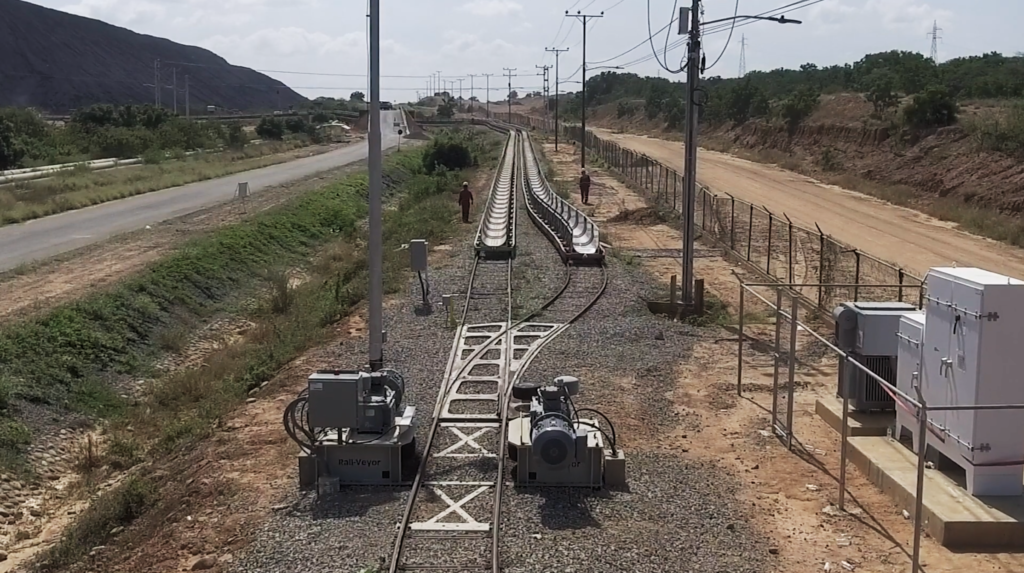
Mohamed said, “Our system was specifically developed to minimise ground disturbance. Instead of requiring heavily engineered haul roads, it operates within a narrow corridor using relatively shallow layers of crushed aggregate, making it particularly well suited to challenging peatland conditions.”
As the system is reliant on electrified operation, it can reduce or eliminate diesel consumption within mine haulage activities, enhancing energy efficiency and lowering emissions over the life of the mine. Mohamed noted that one project study has evaluated the technology for an autonomous electric haulage distance approaching 340km across environmentally sensitive terrain while transporting 10 million tonnes of material a year.
Mohamed said, “Noise is another important consideration in environmentally sensitive regions. Railveyor generates around 70 dB at a distance of 10 metres, making it one of the quietest long-distance haulage options currently available.”
Improved economics
Mohamed explained that electrified haulage systems can enhance mine economics through lower operating costs, increased automation and reduced exposure to volatile fuel markets.
Mohamed said, “Electric haulage offers much greater cost certainty over the life of a mine. Reducing reliance on diesel helps protect operations from energy price fluctuations while improving operational efficiency and safety.”
She also stated that Canadian-developed technologies can provide particular advantages for domestic mining projects because they are engineered for the country’s operating conditions.
Mohamed said, “Solutions developed in Canada are designed to operate in harsh climates, remote environments and within Canada’s regulatory framework. This makes them particularly well suited to projects like those planned for the Ring of Fire.”
Local value chain
Government policy is evolving to drive responsible mine development. Canada’s ‘one project, one review’ approach is intended to streamline regulatory approvals by enabling federal, provincial and local assessments to proceed simultaneously.
Public investment is being directed towards critical minerals development, including a $2 billion Critical Minerals Sovereign Fund and $1.5 billion earmarked for First and Last Mile infrastructure to improve access to remote mineral districts. These initiatives create an opportunity for Canada to reinforce its domestic mining value chain, Mohamed said, by combining supportive policy with locally developed technology.
Mohamed said, “Canada has an opportunity to demonstrate that responsible mining, Indigenous partnerships and technological innovation can work together. If homegrown technologies are integrated early into project design, they can help deliver mining operations that are more efficient, more sustainable and better positioned to withstand future economic and geopolitical challenges.”