Mark Kendall discusses the various methods of protecting energy storage systems from the effects of thermal runaway
In the evolving world of energy storage and electrification, the dangers associated with lithium-ion batteries – particularly thermal runaway – are often misunderstood and miscommunicated. At the Vehicle Electrification Expo in Birmingham, Mark Kendall, director – fire solutions group UK & Europe at Fike Corporation, delivered a talk on the layered approach needed to mitigate risks in lithium-ion battery systems, emphasising thermal management, explosion control, early warning detection, and preventive maintenance.
THE TRIGGERS
“Ultimately, it’s the breakdown of a separator layer within a battery cell that causes a massive chemical-electrical reaction,” Kendall explained. This breakdown allows for an internal short circuit, which sparks an exothermic reaction; a rapid release of heat and gas that initiates what’s known as thermal runaway.
Once this reaction begins, intervention becomes nearly impossible. “Once that first cell has gone into thermal runaway… there isn’t anything that you can do to stop it,” Kendall continued. “The separator layer’s broken down. The chemical reaction has already started.” This harsh reality dispels a common myth in the fire protection industry – that thermal runaway can be halted mid-event using aerosol systems, which Kendall said is not true.
CASCADING THERMAL RUNAWAY
The real danger lies in the domino effect, Kendall explained: “What we now get is a cascading event of that heat from the first cell affecting the next cell,” leading to a full-scale chain reaction. The progression continues through the battery module and potentially into adjacent modules.
This leads to off-gassing, the release of hydrogen-rich gases as the battery’s electrolyte boils and ruptures. “A single cell produces enough hydrogen to put a shipping container above its lower explosion limit,” Kendall said. The flammable vapour cloud ignites when exposed to a heat source, resulting in what many mistakenly call a “lithium-ion fire.” He clarified: “The term ‘lithium-ion fire’ is used to cover every part of this event, but it’s actually just a byproduct.”
Kendall highlighted the confusion caused by the misuse of terminology. “These terms – thermal runaway, cascading thermal runaway, off-gassing, lithium-ion fire – they aren’t interchangeable,” he stressed. Misclassifying the stages of a battery incident can lead to ineffective safety strategies.
ANALYSIS FORMS THE FOUNDATION
A critical part of risk mitigation is understanding the behaviour of each specific battery configuration. “Every cell is different… you can have two modules with the same chemistry, but the way the event goes through can be very different,” Kendall said. For this reason, battery hazard analysis is essential. This involves performing a free burn test, intentionally heating the cell to its thermal runaway threshold (typically between 180°C and 230°C) to gather data on gas emissions, failure timing, and heat propagation.
Kendall outlined a five-layer protection model, emphasising that no single solution can mitigate all potential outcomes.
LAYER ONE: THERMAL MANAGEMENT
Thermal management is the first and most critical line of defence. “The earlier the intervention, the better the chance you have of stopping an event,” Kendall said. Strategies include physical thermal barriers, spacing modules to reduce heat transfer, and the use of active systems like their proprietary direct ejection fluid.
“When we pick up that there’s a thermal runaway event… we release the fluid into the module,” he continued. “It pulls the heat from the cells, stopping that heat from transmitting to the next cell.” The result is a more controlled situation requiring significantly less fluid than conventional methods – about 120 litres compared to millions of litres of water.
LAYER TWO: EXPLOSION CONTROL
Even after suppressing a fire, hydrogen gas may linger and pose an explosion risk, Kendall said: “It’s very easy to end up in an explosive atmosphere from lithium-ion batteries.” Explosion control can involve deflagration vents, which direct explosions safely upward, or exhaust ventilation to keep gas concentrations below critical limits. However, active purging systems can be expensive due to the need for explosion-proof certification.
LAYER THREE: EARLY WARNING DETECTION
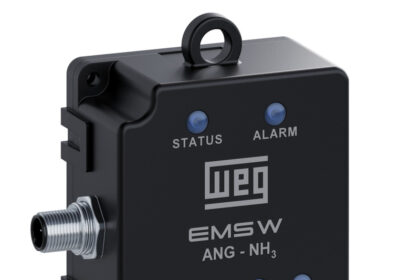
According to Kendall, detection systems are crucial: “The earlier you can pick up an event, the greater the chance of success.” Technologies include digital temperature sensing cables, smoke detection, and most importantly, hydrogen and VOC gas sensors. These sensors often detect changes before a cell physically ruptures. Battery management systems (BMS), while useful, are “not designed for safety systems,” and are therefore secondary in this application.
LAYER FOUR: PREVENTION
Prevention focuses on identifying external factors that might trigger battery failure, such as humidity, corrosion, or electrical faults. “80% of these events are started by something else, not the battery itself,” Kendall added. Traditional fire suppression systems like FK-5-1-12, fluorinated ketones, and aerosols are particularly effective at protecting auxiliary components such as inverters and switchgear.
LAYER FIVE: SUBSYSTEM PROTECTION
The final layer targets supporting equipment. “It’s about protecting things that can cause the batteries to go into thermal runaway, not about protecting the battery itself,” Kendall said. Small-scale fire suppression systems ensure that secondary failures don’t become catastrophic events.
UNDERSTAND, DESIGN, TEST
Kendall concluded with a clear message: “Make sure you understand the risk. Especially if someone’s trying to sell you a system.” He emphasised testing any mitigation strategy with the actual battery system it’s intended to protect, adding, “Just because something works on one battery and that chemistry looks a little bit similar doesn’t mean it’ll work on another.”
As lithium-ion technology becomes more integral to energy and transportation systems, understanding and mitigating thermal runaway is not just a technical challenge, but a safety imperative.