This new technology offers improved chemical and permeation resistance even in challenging environments
Belgian materials developer Syensqo has introduced polyphenylene sulfide (PPS) polymer technology to improve the performance and sustainability of non-metallic piping materials.
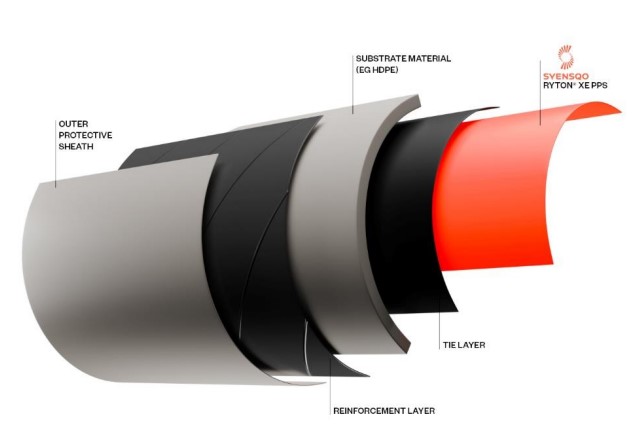
The Ryton PPS XE-5000 offers notable chemical and permeation resistance in high-temperature and high-pressure environments. It is also flame-resistant without the addition of flame retardant additives.
“There is a growing need for new piping materials solutions capable of exceeding the chemical, thermal and pressure resistance of conventional polyethylene or polyamide resins without compromising processability or efficiency,” said William Sattich, the principal scientist for PPS at Syensqo.
“In addition to meeting these requirements, our advanced Ryton PPS XE-5000 technology delivers high-performance extrudable thermoplastic compounds with a permeation resistance far superior to that of common piping materials, revolutionising the energy industry's approach for piping solutions,” he added.
This minimises the leakage and gradual wear that piping can experience when operating in challenging conditions. Replacing pipes less frequently optimises industrial processes and minimises environmental strain, improving overall cost, sustainability and safety.
The Ryton PPS XE-5000 can be used in various industries. For example, it can withstand the heat, fluids and mechanical stress required of automotive parts like brake systems and under-the-hood components. Its low shrinkage for precision molding also makes it a good match for electronic applications such as connectors and sockets.
“The new PPS XE grade expands the legacy of Ryton into higher performance non-metallic piping solutions. This meets customer demands in key markets, including oil & gas and the next generation of energy applications,” said Mike O’Brien, the global marketing manager for energy at Syensqo.
The PPS technology is now commercially available around the world and is ready to be used in inner liners and stand-alone and composite pipes.