Leading institutions and industry bodies across the globe are investing heavily in education and workforce development
The transport industry is experiencing a rapid technological evolution, fuelled by innovation in automation, electrification, and artificial intelligence. To keep pace, leading institutions and industry bodies across the globe are investing heavily in education and workforce development
Recent announcements from Curtin University, the UK’s automotive training sector, and the National Franchised Dealers Association (NFDA) highlight a coordinated effort to equip workers with the skills needed for a smarter, cleaner, and more autonomous transport future.
AUSTRALIA’S AUTONOMOUS FUTURE
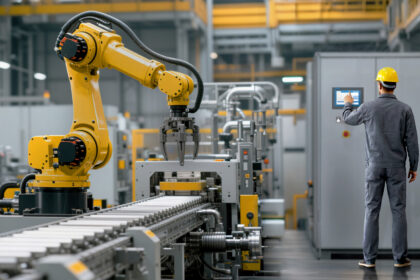
Curtin University has announced a new strategic partnership with Greenroom Robotics, one of Australia’s leading maritime autonomy companies. The collaboration is designed to strengthen national capabilities in autonomous systems, artificial intelligence (AI), and innovation—key pillars underpinning Australia’s future transport and defence sectors.
The partnership will focus on developing a framework to accelerate research, workforce skills, and industry partnerships across multiple sectors, including maritime, energy, space, mining, and agriculture. Greenroom Robotics, renowned for its advanced situational awareness and AI software, already supports partners across AUKUS nations – such as Austal, the Royal Australian Navy, and UK-based SubSea Craft – and has completed successful trials with the US Department of Defense.
Gary Hale, Director of Curtin’s National Resilience and Security Program Office, said the collaboration reflects Curtin’s ongoing commitment to real-world impact.
“By combining Curtin’s leading research expertise with Greenroom’s advanced robotics and autonomy capabilities, this partnership aims to deliver best-in-class solutions to enhance Australia’s resilience and support national priorities,” Hale explains. “It will help build a highly skilled talent pipeline, accelerate the adoption of next-generation autonomous systems, and deliver innovation that strengthens Australia as a nation.”
For Greenroom Robotics, the partnership provides access to Curtin’s research ecosystem and a new pathway to expand its influence in AI-enabled autonomy. COO and co-founder Harry Hubbert said, “We are thrilled to contribute our expertise in cutting-edge maritime AI and autonomy software to Curtin’s collaborative ecosystem. Our proven solutions are already transforming maritime autonomy, and we’re excited to access a broader partner base to make a real difference to safe, clean, and protected oceans.”
Together, the two organisations are laying the groundwork for a new era in autonomous systems education and research which aims to not only bolster Australia’s sovereign capability but also prepare the next generation of engineers, data scientists, and robotics specialists.
TRANSFORMING HEAVY VEHICLE TRAINING
Across the globe, the UK is experiencing a similar transformation, particularly in the heavy vehicle and automotive sectors. This year has seen record investment in technical training facilities, with new academies opening in Derby, Manchester, Nottingham, Sheffield, and Warwick. These centres are designed to deliver advanced training for technicians, equipping them with the expertise to service both traditional diesel vehicles and emerging technologies such as electric and hydrogen-powered trucks.
The expansion of training academies comes amid growing demand for skilled technicians and engineers capable of supporting the transition to cleaner transport. Industry leaders recognise that upskilling today’s workforce is vital to maintaining safety, reliability, and performance as new technologies enter the market.
Recent graduation ceremonies have highlighted the scale of this progress, with more than 120 heavy vehicle technician and parts apprentices celebrated at one of the largest industry events to date. These achievements underline the value of long-term investment in technical education, both for individual career growth and for the sector’s competitiveness.
However, industry stakeholders emphasise that continued government support is essential. Following recent departmental reshuffles, the Society of Motor Manufacturers and Traders (SMMT) is calling for alignment between the Department for Education (which oversees under-19 education) and the Department for Work and Pensions (responsible for adult training). Collaboration between these departments is key to addressing the full lifecycle of workforce development, from school leavers to mid-career professionals seeking to reskill.
SMMT’s joint STEM Returners Project, developed with the aerospace sector, is one example of how the industry is encouraging diversity and inclusion by welcoming career changers and returners. With skills needs spanning electric and hydrogen propulsion to autonomous technologies, opening pathways to people from all backgrounds is seen as essential to long-term success.
SUPPORTING THE NEXT GENERATION
The National Franchised Dealers Association (NFDA) is also pushing for reform in technical education to meet the challenges of the zero-emission transition. The NFDA has urged the UK government to ensure the automotive industry is fully represented in the development of new V-level qualifications for 16-year-olds – a replacement for existing Level 3 BTecs and other similar courses.
Designed to sit alongside A-levels, T-levels, and apprenticeships, V-levels will offer a more flexible, employment-focused route into technical careers. The NFDA believes these qualifications could be pivotal in addressing the UK’s acute shortage of electric vehicle (EV) technicians, a gap that poses a potential obstacle to achieving national net-zero goals.
Sue Robinson, NFDA chief executive, said the new qualifications could help inspire a new generation to pursue careers in automotive technology.
“The UK is already facing a shortage of qualified EV technicians, which could present a major obstacle to the nation’s zero-emission goals,” Robinson warns. “We urge the Department for Education to include the automotive sector within the first wave of V-level development and to work closely with industry to design qualifications that address this growing skills gap.”
Through its Drive My Career initiative, the NFDA continues to engage employers and young people to promote opportunities in automotive retail, service, and repair. By ensuring the sector’s inclusion in the new qualification framework, the NFDA hopes to build a steady pipeline of skilled professionals ready to power the transition to electrified and connected mobility.