Selecting the proper polymer system can help process engineers deliver cleaner water; here we explore how.
In the process industry, chemical polymers are added to industrial clarifiers, settling ponds, and other wastewater equipment at various stages of treatment. This is done to comply with the US’s EPA wastewater regulations and reclaim valuable resources.
These polymers promote flocculation, a process in which small particles clump together into larger particles called flocs, which settle at the bottom. The clarified water can then be discharged for re-use, disposal, or further treatment.
Selecting the right polymer
The problem with this highly effective and economical method of removing suspended solids from wastewater is that not just any old polymer will not do. In fact, the polymer selected for the application and the preparation system that mixes and injects the product into the clarifier determines the quality of separation/clarified water, the dryness of solids, and the amount and cost of polymer required.
“Selecting the correct polymer, ensuring its proper preparation, and optimising the chemical reaction all have a significant impact on water and solids quality. A more meticulous approach to polymer and the make-down system can reduce costs by lowering the amount of product required, ultimately producing better solids and cleaner, higher quality water,” says Shane Schmutzler, president of Port Washington, WI-based Jadair International, a provider of systems for polymer preparation, water clarification, and materials reclamation.
To improve sub-par flocculation outcomes, transitioning to superior polymers and preparation systems can boost performance without modifying other existing system components.
“Replacing less effective polymers can reduce polymer costs by up to 50% while improving the experience of the operator, facility, and community involved in the project,” says Schmutzler.
He also explains that polymer suppliers often struggle not only with selecting the optimal polymer for the task but also in system design and application. Incorrect polymer preparation and application can lead to compromised water quality and increased chemical consumption. This will lead to increased costs if the user is found to be non-compliant with local, state, or federal environmental standards, and fines will subsequently be levied or corrective actions mandated.
Meticulous polymer selection is therefore essential. To determine the best polymer for each application, Jadair provides water testing and evaluation services to its clients. This water testing (also known as jar testing) ensures optimum water quality and performance for all water clarification systems.
Tailored customer advice
The company then works directly with polymer manufacturers to identify the best product for each application. “Ultimately, a polymer tailored to the specific process yields the best results, producing cleaner water along with higher quality solids,” says Schmutzler.
Jadair also manufactures standalone polymer preparation systems in various forms and sizes that can be used with existing settling ponds, clarifiers, and other wastewater treatment equipment.
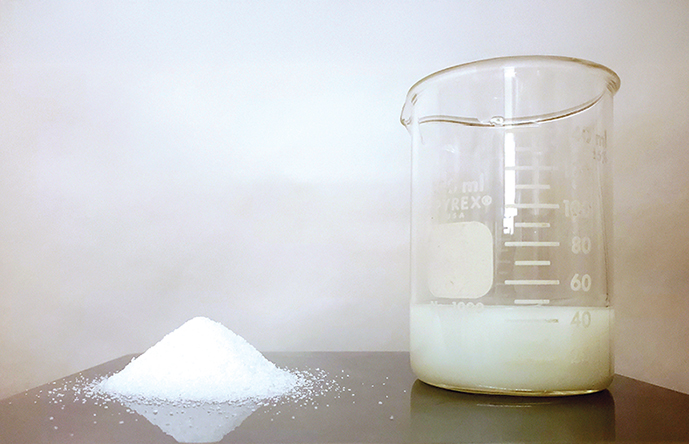
Polymers usually come in a concentrated powder or liquid form that must be transformed into a usable solution in a polymer preparation or ‘make-down’ system.
“The concentrated polymer needs to be diluted, mixed, and prepared for application to optimise its reaction and effectiveness,” adds Schmutzler. The goal is to design the system so that the product delivers the best reaction possible with the lowest usage.”
The system can be used in conjunction with a clarifier system to improve the water clarification process.
“Our settler/clarifier systems provide a continuous supply of clarified water while separating out thick, drier solids in an automated process,” explains Schmutzler. “The process is even more efficient when using properly specified and prepared polymers.”
With a Jadair settler/clarifier system, polymer is injected into the water stream before it enters the machine. After flocullation occurs, the clarified water is discharged into a receiving tank for re-use. The system separates the suspended solids and brings them out in a thickened form that does not require secondary processing. The solids are then removed from the machine and accumulated in front of the system, they can then be handled by a loader or belt conveyor.
“Our discharged solids can be easily scooped up by loaders and stacked for further drying or for sale to companies such as those involved in landscaping, landfill, or soil remineralisation. What was once waste can become a saleable product,” says Schmutzler.
Their polymer system can even be used with existing settling ponds or other equipment to help keep the water cleaner and make settled solids easier to handle.
Effective water clarification is crucial for many industries. Properly applied polymers and polymer systems can improve results while reducing wastewater and solids discharges problems. Industry experts utilising optimal techniques to address these challenges will benefit from streamlined operations, the prevention of environmental compliance violations, and the recovery of valuable water and solids for reuse or disposal.
For more information visit: www.jadair.com