Fire & Gas Detection Technologies combines innovation and expertise to revolutionise optical flame detection
Fire & Gas Detection Technologies (FGD) combines innovation and expertise to revolutionise optical flame detection. We tackle the challenges that slow productivity, threaten safety, and erode profitability to deliver smart solutions that cut false alarms and make installation and commissioning simpler, faster, and more efficient, even in the most demanding applications
A NEW APPROACH TO FOV
Accurate positioning and alignment of flame detectors are critical to ensuring reliable fire detection and compliance with performance-based mapping studies. Traditionally, this process has relied on laser-based field-of-view (FOV) mapping tools. While effective in principle, these tools have well-known limitations: laser beams can be hard to see in bright conditions, field checks are time-consuming, and results are not automatically recorded for future reference.
The FlameSpec FlameView system offers a modern, highly efficient alternative. By combining built-in video capability with intelligent coverage overlays, FlameView transforms the way technicians validate and document a flame detector’s field of view – dramatically reducing installation time, improving accuracy, and creating a permanent visual record.
HOW DOES IT WORK?
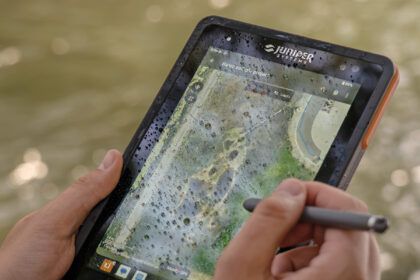
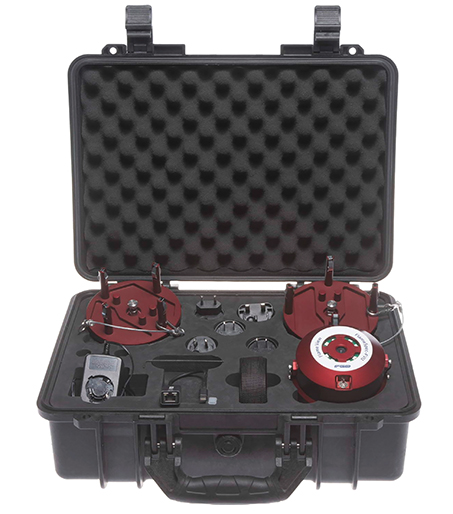
FlameView is specifically designed for use with FlameSpec IR3 and UV-IR flame detectors, including both standard and high-definition (HD) models. Using mechanical adapters provided for different detector sizes, the FlameView unit attaches directly to the front of the detector during installation. Once mounted, FlameView’s integrated video camera “sees” exactly what the detector sees. This live feed is streamed to a connected portable device via Wi-Fi (or via wired connection using the USB-C data port). The result is a real-time, on-site view of the exact coverage area. FlameView does more than just display an image. it superimposes a smart overlay showing the detector’s ON-axis and OFF-axis detection zones, based on detector type, sensitivity, fuel type, and fire size. This allows installers to position and angle the detector for optimal coverage without guesswork.
- ON-Axis Zone (±30° around central axis): Primary detection area with maximum range
- OFF-Axis Zone (±30° to 45°): Reduced sensitivity zone, typically ending with half of the ON-axis range at the most extreme angle
FlameView also displays live direction measurements, enabling precise alignment in accordance with site mapping specifications. Installers can immediately adjust tilt, swivel, and elevation to match the intended coverage.
VERIFICATION AND DOCUMENTATION
A key advantage of FlameView over traditional laser mapping tools is its ability to capture and store a snapshot of the detector’s exact field of view at the moment of commissioning. This image – complete with coverage overlays – can be automatically converted into a PDF report, tagged to the specific detector location.
These records provide instant compliance documentation for audits and performance-based fire safety reviews. During routine maintenance, technicians can compare the detector’s current position with the original installation image to check for movement due to environmental factors or accidental impacts. If repositioning is needed, FlameView can be remounted, adjustments made, and a new coverage record generated – ensuring that every change is properly documented.
ONGOING MAINTENANCE AND RE-VERIFICATION
Routine maintenance of flame detection systems often includes confirming that each detector remains correctly positioned, as even slight shifts caused by vibration, weather, or accidental impacts can compromise coverage. With traditional laser-based mapping, this process can be laborious – requiring significant setup time and conditions that allow the laser beam to be visible. FlameView eliminates these inefficiencies. Technicians can reattach the unit to any FlameSpec detector and, within moments, generate an updated field-of-view map overlaid with the correct coverage zones. This near-instant verification not only ensures continued compliance with the original commissioning but also frees up valuable maintenance time, allowing teams to focus on higher-priority safety and operational tasks.
ADVANTAGES OVER TRADITIONAL LASER-BASED TOOLS
For years, project teams have relied on laser-and-test-holder arrangements to trace detector fields-of-view. This method has several drawbacks: visibility challenges, time-intensive and lack of permanent record. FlameSpec FlameView overcomes these issues with the following benefits:
- Speed: Reduces mapping time from tens of minutes to just a few minutes per detector
- Accuracy: Provides visual confirmation with superimposed detection zones tailored to the actual detector and settings
- Documentation: Automatically generates permanent, tag-specific coverage records in PDF format
- Usability in all conditions: Works effectively in bright sunlight, low light or smoky environments
LOGISTICAL AND REGULATORY DRAWBACKS
In addition to their operational limitations, traditional laser-based FOV mapping tools present logistical and regulatory challenges. High-powered lasers can fall under dual-use export control regulations, creating added complexity for international shipments and, in some cases, requiring export licences. They may also be subject to transport restrictions or special handling requirements due to safety classifications.
FlameView sidesteps these issues entirely – there is no restricted technology, no hazardous goods classification, and no special permits required. Even the rechargeable lithium-ion batteries that power the unit are sourced locally, eliminating the transport restrictions and extra shipping costs typically associated with dangerous goods. This makes FlameView simple, fast, and cost-effective to deploy anywhere in the world.
Dr Eliot Sizeland is vice president of business development at Fire & Gas Detection Technologies: www.fg-detection.com