Lenze’s Marc Vissers explains why Europe’s next phase of digitalisation depends on simpler systems, scalable knowledge and stronger operational foundations
Europe does not need more automation complexity. It needs operational choices that make performance easier to scale.
Across Europe’s manufacturing industry, leadership teams are being asked to deliver more with less: higher output, smaller batch sizes, lower energy exposure and greater flexibility for customers. Yet many operational environments have become harder to manage than they were ever meant to be. As a result, growth, maintenance and innovation are increasingly difficult to scale.
Europe’s industrial competitiveness will increasingly depend on how well manufacturers turn complexity into repeatable, scalable performance. For machine builders, system integrators and industrial decision-makers, the discussion is no longer about the next automation choice alone. It is about whether the operational foundation still supports the speed, resilience and cost discipline the market now demands.
That is why the conversation is moving from technology selection to business performance. Digitalisation creates value only when it rests on an operational base that is simple enough to scale, robust enough to protect continuity and transparent enough to support better decisions across the lifecycle.
For years, operational technology was seen mainly as an engineering domain: essential, technical and operational. That view is no longer sufficient. Energy uncertainty, labour shortages, loss of experienced domain knowledge and sharper capital discipline have made the factory a strategic business asset.
The factory is where financial resilience, delivery reliability and strategic flexibility are either protected or exposed. Complexity, downtime, energy loss and knowledge dependency now directly affect margins, customer commitments and strategic agility.
The real question is not whether companies should continue to digitalise. It is whether their operational foundation is strong enough to convert digitalisation into measurable business value.
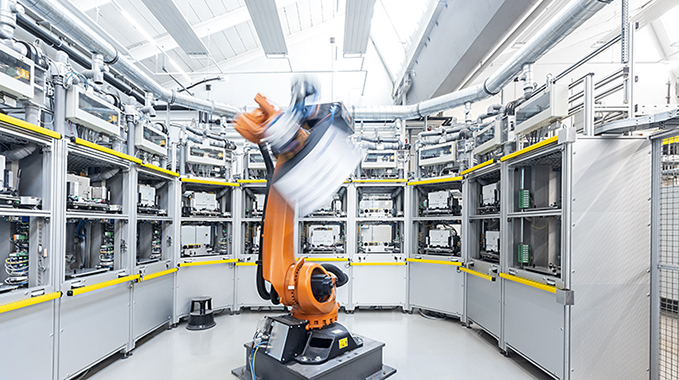
THE TRUE VALUE OF DATA
In many factories and machine platforms, that foundation has grown over time: systems alongside systems, variants alongside variants, customisation on top of customisation. The biggest weaknesses are rarely found in a single machine or technology. They usually sit in the system around it: too many customer-specific exceptions, limited standardisation, fragmented software and service processes, and knowledge concentrated in a small group of specialists. Even decisions that appear technical, such as selecting the right axis concept, increasingly influence how easily performance can be repeated, maintained and scaled.
At first glance, this may look flexible. In practice, it raises maintenance costs, limits engineering capacity and makes downtime more visible as a financial risk. The next productivity step will not come from adding another technology layer, but from the discipline to simplify, standardise and modularise: choosing the best-fit axis, architecture and control concept for the business outcome, not simply the most familiar technical option.
Companies that reduce complexity shorten development time, lower error risk, increase uptime and make growth less dependent on scarce capacity. In a labour-constrained market, the issue is not only the shortage of people; it is the growing concentration of critical domain knowledge.
The answer is not to place more pressure on scarce specialists. It is to capture their expertise in standards, modules and repeatable concepts, so knowledge becomes scalable, transferable and less dependent on individual availability.
The parallel with grid congestion is telling. Across Europe, capacity constraints have shown that technical fixes alone do not solve structural pressure. The stronger question is which operational choices safeguard continuity, reduce risk and protect the business case in a measurable way.
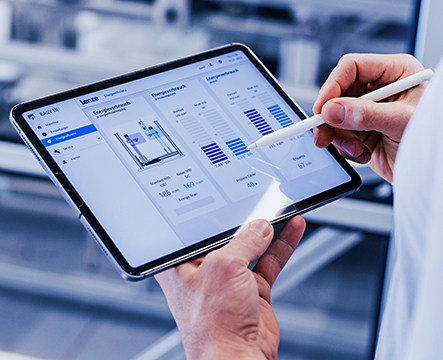
AUTOMATION SHIFT
Investment discussions must therefore move beyond purchase price and towards total cost of ownership. Energy consumption, maintenance, downtime, service, upgrades and flexibility determine return. This is where the difference becomes visible between companies that sell technology and companies that help organise value.
Lenze approaches this challenge from that second perspective. By engaging early, the underlying business questions become visible: where vulnerability arises, where margin disappears and where variation limits scalability. From that analysis, complexity can be reduced, architectures can be standardised and technology can be translated into a lifecycle- and TCO-driven business case.
The result is not simply a stronger technical story. It is a more controllable business case: fewer variants, lower lifecycle costs, more predictable performance and faster scalability. Above all, it reduces dependence on exceptions, scarce resources and isolated domain knowledge.
Tomorrow’s winners will not be defined by the amount of technology they deploy, but by how effectively they connect technology to what matters in the boardroom: cost control, continuity and scalable value. In Europe’s next phase of digitalisation, the strongest manufacturers will be those that simplify best.
Marc Vissers is at Lenze
Read the October issue of International Design Engineer magazine here, or visit our magazine archive for all our recent publications.