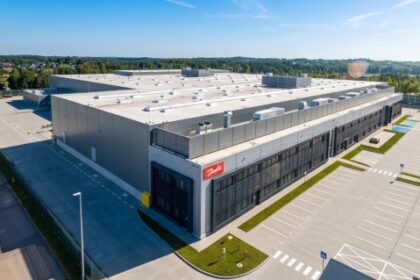
For data centre owners and operators, maintaining uptime depends on more than the reliability of servers and other computing equipment. Larger facilities are more power-intensive and more complex and require durable, proven identification systems, such as signage, labels, tags, and other visual identification products, to aid in the operation and maintenance of critical infrastructure
The large amount of physical, complex infrastructure poses a challenge, as repair and maintenance crews often navigate a maze of transformers, cable routes, switchgear assemblies, cooling loops, valves, generators, and UPS equipment.
Dan O’Connor, vice president of Tech Products, said, “Data centres contain an enormous amount of physical infrastructure that has to be maintained and, when necessary, repaired as quickly as possible. The ability to identify the correct asset, cable, circuit or hazard quickly becomes part of keeping that infrastructure operating safely and reliably.”
As equipment, assets, and infrastructure will require maintenance throughout their life cycle, reliable identification systems are vital to reduce downtime and restore systems to normal operation. For signage, labels, and tags to serve their purpose, they must remain readable throughout the lifetime of what they identify.
O’Connor said, “Nobody notices a faded or unreadable sign until they need the information on it. A technician may already be tracing a circuit, looking for a valve, or checking a lockout/tagout point, and a damaged or degraded sign can bring the job to a stop. In a data centre, where maintaining uptime is the overriding priority, those delays can become expensive.”
Identification as Critical Infrastructure
O’Connor believes signage should not be viewed simply as a compliance or labelling detail in data centres. Durable, functional signage can be an integral part of the infrastructure; it is required to operate and maintain these facilities.
Within a data centre, generators, transformers, switchgear assemblies, medium-voltage equipment, PDUs, UPS systems and battery areas all need clear identification. The same applies to fibre routes, structured cabling, valves, pumps, chillers, CRAH and CRAC equipment. Rooftop equipment, underground utilities, access points, and hazardous areas all need to be labelled and identified.
O’Connor said, “Although these systems perform very different functions, by their integration and interconnectedness to the facility at large, they share the same basic requirements for identification: that they remain legible throughout years of maintenance, expansion and exposure to demanding operating conditions.”
Compliance standards reinforce the importance of disciplined identification. ANSI/TIA-942 covers data centre physical infrastructure, including telecommunications, electrical, mechanical, fire safety, security, and other requirements. ANSI/TIA-606-D further addresses the administration of systems for telecommunication infrastructure, including data centre premises, and includes assigning identifiers, maintaining records, and graphical or symbolic requirements.
Despite this, compliance standards alone are not enough. Organisations can be better served by implementing an identification program that addresses the facility’s needs throughout its operational life, rather than relying on reactive, ad hoc remediation.
When “Good Enough” Stops Being Good Enough
Not all identification products remain legible over the full life of the asset as paint fades, laminates peel, printed marking wear away, and adhesives can fail. Outdoor exposure, UV, humidity, temperature variation, chemical exposure and routine handling can also lead to degradation. Due to the gradual nature of deterioration, the operational impact is often discovered only when an asset fails and needs to be identified.
When signage fails and cannot be read, the response to an issue or an emergency takes longer, and there is more opportunity for error. This is especially problematic in data centres as the infrastructure of these facilities is constantly changing.
Data centre owners and operators should be cautious about identification products marketed as long-lasting, but that still fade, peel, or become unreadable prematurely in demanding conditions.
The cost of producing a viable label or marker is negligible, but the cost of sending crews back through a large campus to inspect and replace failed identification products across electrical, fibre, cooling, and safety systems can be substantial.
Designing Identification to Last
For applications with the longest-lasting requirements, durable materials and marking methods should be favoured over impermanent paints and laminates. Signage should be constructed with robust substrates, moulded-in graphics, or raised characters that can withstand years of abuse without becoming unreadable.
One example of this is Everlast, from Tech Products. Made with polyolefin plastic, the letters and graphics are formed into the material itself, where they are less likely to wear away. This is suitable for data centres, where signage is regularly exposed to moisture, sunlight, chemicals, abrasion, outdoor weather, or repeated contact during maintenance.
Another approach is embossing, which creates raised characters in metal or polymer materials and remains legible even when a marker is dirty, dusty, painted over, or viewed in less-than-ideal conditions. Tech Products manufactures Tech-3D deep embossed aluminium data plates with raised copy, baked enamel colours, custom layouts, serialisation, and sizes ranging from very small plates to large formats. Embossed plates can be used for equipment serial numbers, electrical specifications, safety warnings, operating parameters, transformer identification, and other permanent asset information.
For tight or confined areas requiring close-up reading, miniature markers can also play a role. Tech Products’ FastTag markers snap together around cables, conduit, valves, poles, and other infrastructure. They have raised 3D characters and UV-stable foil and are made from nonconductive materials that do not corrode.