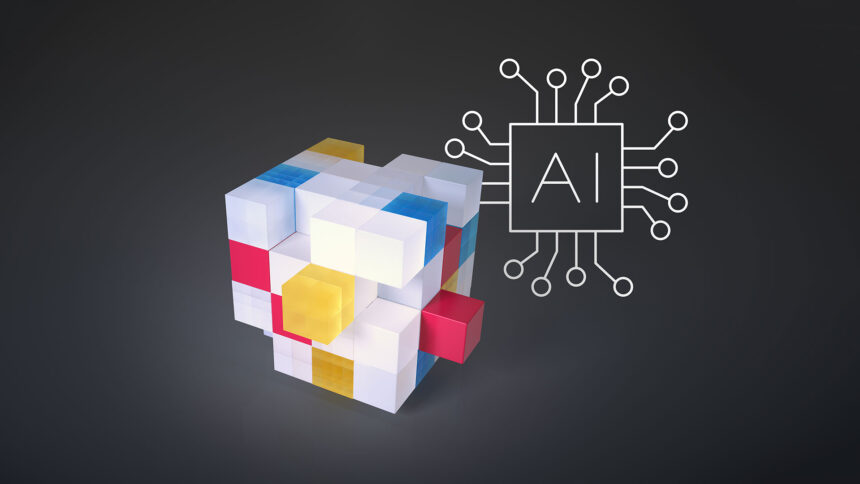
Vector has expanded its CANoe development and testing environment with artificial intelligence (AI) agents and Model Context Protocol (MCP) capabilities, enabling engineers to automate development, analysis and validation workflows using natural-language prompts.
The new functionality, available through CANoe 20 SP2 and the CANoe AI Package, allows users to provide a requirement as a prompt and have an AI agent generate the corresponding CAPL test, execute it within CANoe, analyse failures, modify the code and rerun the test. The resulting scenario can then be reviewed by the engineer through synchronised CANoe windows before the results are approved.
Vector said workflows that previously required hours or days can be completed within minutes, while users retain control over the level of autonomy granted to the agents. Each operation remains visible and can be monitored within the development environment.
The system uses an open AI architecture comprising agents, skills and MCP tools. Users can employ their own large language model (LLM), including models behind services such as GitHub Copilot or Claude, while Vector provides the AI integration layer.
The MCP-based approach also enables engineers to read and modify configurations, control simulations, create tests, analyse communication flows and generate or optimise CAPL, C# and Python code through prompts.
Vector-RAG retrieval-augmented generation provides agents with access to relevant information from Vector’s documentation, allowing responses and automated actions to be based on verified technical information rather than relying solely on language-model-generated assumptions.
The architecture is intended to support both new and experienced CANoe users, from straightforward queries through to fully automated workflows incorporating multiple development and testing activities.
The CANoe AI Package is available as a free download and is compatible with CANoe 20 SP2 and subsequent versions. Users must provide their own language model.
Vector said: “From a single prompt, an AI agent creates the appropriate CAPL test from a requirement, executes the test in CANoe, analyzes errors, corrects the CAPL code, and reruns the test.”
The company has also made the MCP Server integrated into CANoe and the CANoe AI Package available as part of Version 20 SP2.