
A new government-backed battery development programme is aiming to accelerate electrification for specialist vehicle manufacturers by providing a scalable, UK-developed modular battery system that reduces engineering complexity while strengthening domestic battery capability
The Advanced Modular Battery System (AMBERS) programme brings together battery cell manufacturer Volklec, engineering consultancy Ricardo and battery pack specialist Hyperbat, a Unipart company, to develop a modular battery platform for demanding automotive and defence applications. Backed by investment through the Battery Innovation Programme, part of a £452 million government-supported initiative delivered by Innovate UK with support from the Department for Business and Trade (DBT), the project is intended to provide manufacturers with a faster, lower-risk route to battery integration.
THE AMBERS PROGRAMME
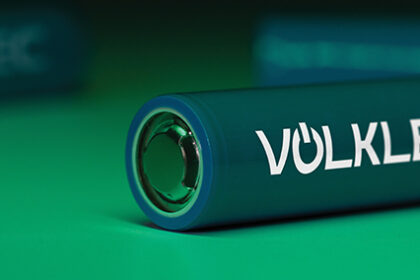
At the heart of the programme is a configurable battery pack designed around Volklec’s high-power 21700 cylindrical cells. The modular architecture enables packs to be configured with between one and five modules, each delivering 1.8kWh of energy capacity. This approach allows the system to be adapted to meet a range of voltage, power, packaging and integration requirements while supporting differing qualification standards across multiple sectors.
“AMBERS is exactly the type of programme the UK needs: application-led, execution-focused and built around the capabilities required to manufacture advanced battery systems at speed,” says Johan Andersson, chief commercial officer at Volklec.
Rather than requiring OEMs to develop every aspect of battery technology internally, AMBERS provides an integrated solution combining cells, battery management systems and pack engineering. For specialist vehicle manufacturers, where production volumes often do not justify extensive in-house battery development programmes, the modular approach offers a practical route to electrification with reduced technical and commercial risk.
ADDRESSING SUPPLY CHAIN RESILIENCE
The battery packs are being developed for a broad range of applications, including hybrid sports cars, specialist automotive platforms, defence mobility, auxiliary power systems, unmanned ground vehicles (UGVs), unmanned aerial systems (UAS) support equipment and other high-power mobile platforms requiring compact, durable and scalable energy storage solutions.
Beyond product development, the programme also addresses wider supply chain resilience. For defence customers and other regulated industries, access to domestically manufactured battery technology can help satisfy sovereign procurement requirements while reducing exposure to international supply chain disruption and improving long-term security of supply.
COMBINED TALENTS
The collaboration brings together complementary expertise across the battery value chain. Ricardo will contribute systems engineering capability, Hyperbat will provide battery pack manufacturing expertise, and Volklec will establish the cell manufacturing pathway. Together, the partners aim to create a more integrated UK battery ecosystem linking cell production, pack manufacture and vehicle integration.
The programme is also expected to create a direct route for Volklec’s battery cells into future customer programmes, supporting the development of a stronger domestic battery manufacturing base while increasing the availability of UK-developed battery technologies for both domestic and international markets.
Andersson explains, “By combining Volklec’s high-power 21700 cell capability with Ricardo’s systems engineering expertise and Hyperbat’s pack manufacturing experience, AMBERS creates a scalable route for customers to access advanced sovereign battery technology without having to build every layer of capability themselves.”
Development work is now underway, with prototype battery packs scheduled for deployment in April 2028. As the programme progresses, the consortium expects to engage with prospective customers to support platform configuration, qualification requirements and future production planning, helping specialist vehicle manufacturers accelerate electrification while reducing development timelines and integration risk.