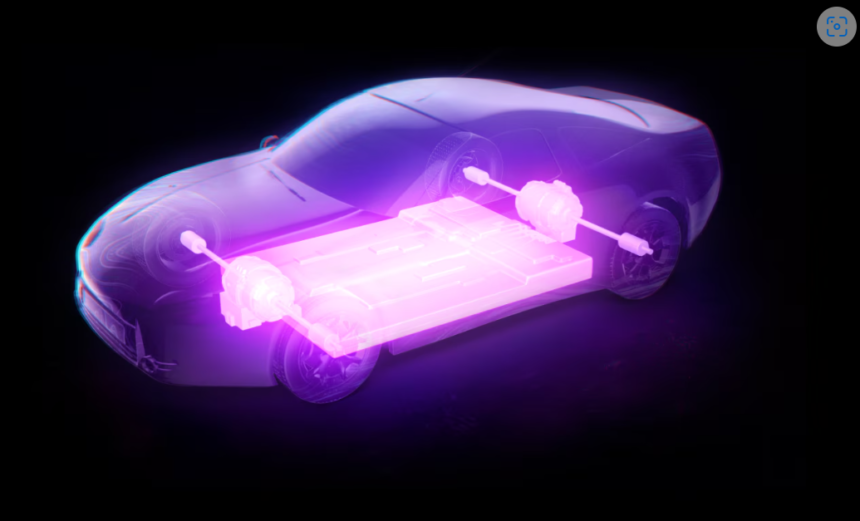
The new technology looks to improve the speed and efficiency of production, requiring just one spray to achieve the desired film thickness.
A newly developed powder coating technology by AkzoNobel is providing improved electrical protection for electric vehicle (EV) battery systems, as part of its Resicoat range. This comes amid a growing need for coatings with higher dielectric strength, to ensure the safety of battery systems.
The new coating can be applied in a single spray, improving the efficiency of production. Customers can reach the required thickness of film in a single spray, meaning this part of the process is now faster, making overall production quicker. This reduces the amount of spray required, while also decreasing labour hours required for production and improving speed. This keeps the EV battery systems safe, protecting them thoroughly whilst allowing manufacturing to produce more EVs.
The technology is best suited to battery systems. This includes cooling plates, side plates and battery covers, and currently available in China. The new spray is also resistant to thermal shock, water immersion and chemicals.
Director of AkzoNobel’s powder coating business, Jeff Jirak, said: “Thanks to decades of knowledge and non-stop innovation, we understand how exceptional powder coatings, combined with the right application technique, can provide consistent electrical insulation throughout the life of key battery system components.
“Working with customers throughout the value chain has put us in a unique position to understand the needs of the market. Our strong global footprint means they can benefit from our ability to deliver consistency in product and service worldwide.”
AkzoNobel's dedicated range of Resicoat EV powder coatings is targeted at improving the safety and performance of EV components. Founded in 1792, the company has been supplying paints and coating, aiming to always be innovative. This is the latest step in its history of innovation.