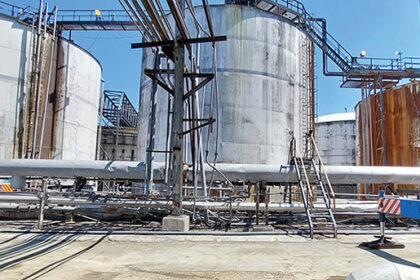
Process plants are becoming more connected, more instrumented and more dependent on electrical and data infrastructure
Across sectors such as chemicals, pharmaceuticals, food processing, energy and water treatment, operators are adding sensors, control systems, monitoring equipment and automation platforms to improve safety, efficiency and reliability.
This shift creates a practical engineering challenge. The physical routes that allow cables and pipes to pass through walls, floors, cabinets and structural barriers must be able to support change without compromising safety. A penetration that is suitable at commissioning may need to accommodate additional services years later. If that future need is not considered at the design stage, upgrades can become slower, more expensive and potentially more difficult to manage safely.
Cable and pipe penetrations are sometimes treated as secondary details compared with the major process equipment, control systems and structural design. However, they can have a direct influence on fire safety, water tightness, gas tightness, environmental separation and the integrity of hazardous or controlled areas. In many facilities, the barrier is only as effective as the sealing system used where services pass through it.
The growing complexity of process plants means engineers should consider service penetrations as part of the wider lifecycle strategy, not only as a construction-phase requirement.
PLANNING FOR FUTURE MODIFICATIONS
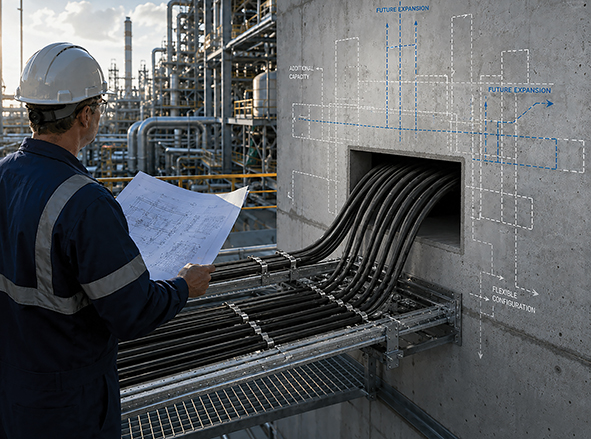
Plant layouts rarely remain unchanged. New production lines, updated control systems, condition monitoring equipment and safety upgrades often require additional cables to be routed through existing structures. In older facilities, documentation may be incomplete, and space within penetrations may already be limited.
When spare capacity has not been planned, site teams may be forced to find improvised routes. These can include drilling new openings, overfilling existing penetrations or using temporary sealing methods that remain in place longer than intended. Each of these actions can increase risk, particularly in areas where fire resistance, pressure resistance, hygiene, water ingress protection or gas containment is required.
A more resilient approach is to consider future modification at the design stage. This includes assessing expected cable growth, allowing spare capacity where appropriate, and ensuring that sealing arrangements can be inspected, reopened and resealed without unnecessary damage to the surrounding structure.
This is especially important where process plants are being modernised. Digitalisation projects often begin with relatively small additions, such as new sensors or monitoring points, but can expand over time. The physical infrastructure must be able to keep pace with these changes.
MAINTAINING BARRIER PERFORMANCE
The main purpose of a sealed penetration is to maintain the performance of the barrier it passes through. Depending on the application, that may involve resistance to fire, smoke, gas, water, dust, pests or pressure. In hazardous environments, poor sealing can contribute to the spread of fire or hazardous substances. In controlled production areas, it can affect hygiene, cleanliness or environmental separation.
Performance depends not only on the sealing system selected, but also on correct installation and long-term maintenance. A penetration may be correctly installed during construction, but later altered during maintenance or upgrade work. If the changes are not properly recorded and resealed, the original safety function can be weakened.
For this reason, inspection and documentation should form part of the engineering process. Plant operators should know where penetrations are located, what services pass through them, what level of protection is required, and whether any spare capacity remains. This information is valuable during audits, shutdown planning and emergency repairs.
COORDINATING DISCIPLINES EARLY
Cable and pipe penetrations sit at the intersection of several disciplines. Electrical engineers, process engineers, mechanical engineers, civil designers, fire safety specialists and installation contractors may all have an interest in the same opening. Without coordination, conflicts can appear late in the project, when changes are more expensive and harder to resolve.
Early coordination helps determine the size, position and protection requirements of each penetration. It also reduces the likelihood of overcrowding, poor access or incompatible installation methods. In modular construction or prefabricated plant sections, this becomes even more important, as late changes can disrupt manufacturing schedules or require rework on site.
Digital planning can support this process by giving project teams a clearer view of cable schedules, penetration layouts and available capacity. Used properly, planning data can help reduce uncertainty between design, installation and maintenance teams. It also creates a stronger basis for future modifications, because the operator has a record of what was installed and why.
DESIGNING FOR LIFECYCLE VALUE
The cost of a cable or pipe penetration is small compared with the cost of production downtime, emergency rework or loss of barrier integrity. Yet the consequences of poor planning can be significant. A plant upgrade that should be straightforward may require additional permits, hot work, structural modification or extended shutdown time simply because service routes were not designed for change.
A lifecycle approach considers not only the initial installation, but also the future need to inspect, modify and reseal. It asks whether the penetration can be accessed safely, whether additional services can be added without compromising performance, and whether maintenance teams can verify that the barrier remains compliant.
For more information visit: www.mctbrattberg.com