The new portfolio includes thermal gap fillers, gasketing solutions, threadlockers and retaining compounds
Loctite has launched a new portfolio of adhesive solutions to meet the growing demands of the e-Mobility repair sector
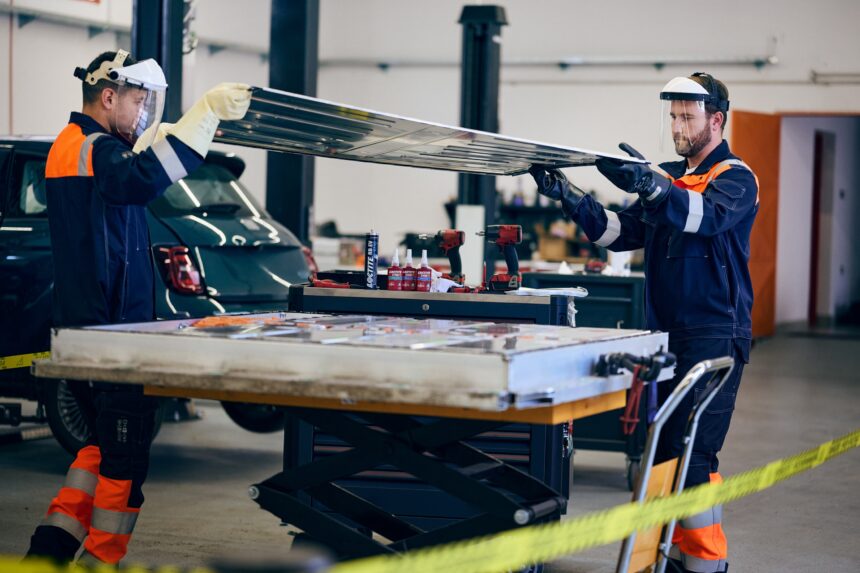
The new portfolio includes thermal gap fillers, gasketing solutions, threadlockers and retaining compounds, designed to support the unique requirements of electric vehicle (EV) battery and e-Drive system repairs. These solutions extend the lifespan of critical components, supporting sustainability goals.
The automotive industry is advancing toward electrification, and repair professionals are facing the challenges from the new generation of technical demands, including high-voltage safety requirements and servicing sophisticated vehicle components. Loctite's latest adhesive portfolio is engineered to deliver targeted solutions and support, enabling safe, efficient, and environmentally responsible repairs.
Choosing to repair an EV battery, instead of replacing one, can reduce costs by up to 77% and cut CO₂ emissions by up to 91%. Robust gasketing and thermal management Loctite products are created to help workshops carry out repairs with precision and durability. For e-Drive systems, retaining compounds and threadlockers secure and protect key components, improving performance and potentially leading to a longer service life.
The new adhesives have been formulated to meet EV safety standards, including those related to thermal management, while providing user-friendly handling and fast or no-cure options to streamline workshop throughput. Loctite also offer guidance and technical assistance across the full range of solutions.
George Hickey, Market and Customer Activation manager at Henkel, said, “By enabling safe and sustainable repairs, our new e-Mobility adhesive solutions will help extend the life of electric vehicles and reduce their environmental footprint. This portfolio reflects our ongoing commitment to innovation and sustainability in the automotive sector.”