Electric vertical take-off and landing aircraft aided by new generator
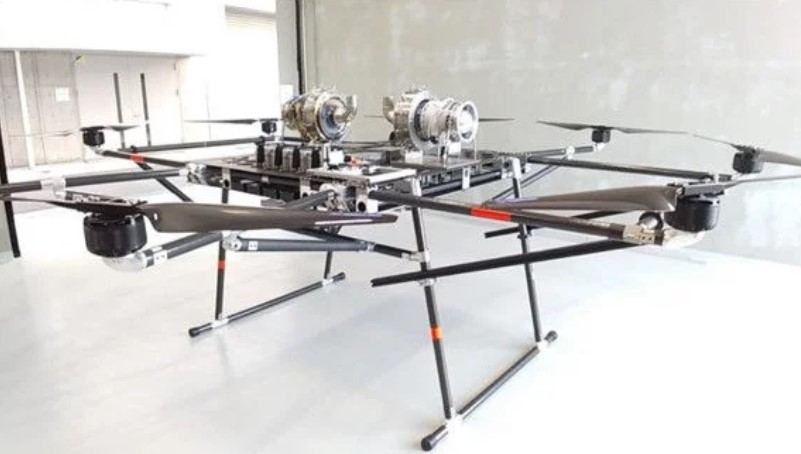
Bearing manufacturer NSK has developed a new turbine generator bearing for electric vertical take-off and landing (eVTOL) aircraft, including drones. It features an increased revolution performance and a mechanism which reduces lubricant necessity supply by 80% allowing for longer eVTOL flight ranges.
By 2035, the market for eVTOL is predicted to reach a size of €124 billion, driving investment into technology. Complete motorisation was a previous feature of eVTOL propulsion systems but as the need for longer flight ranges increases expectations for high-output, compact, lightweight hybrid motors demand continues to rise.
Biofuels and hydrogen can be used as fuel sources for gas turbine generators, giving them an edge over other hybrid motor designs. These make the motors a good carbon-neutral option. Practically, gas propulsion systems are most efficient for eVTOL aircraft.
NSK is aiming to develop a bearing capable of delivering over 2.5 million dmn, this product is for pitch diameter and rotation speed. High-speed revolution performance of gas turbine generator bearings is required for extended eVTOL flight lengths.
The most commonly used lubrication mechanism for high-speed bearings is jet lubrication, which requires large volumes of lubricating oil and can cause high power loss. A method using minimal lubrication oil and power loss is under-race lubrication. Dedicated flow channels in the shaft and bearing inner race to supply oil, but this is a costly method.
NSK has employed a new mechanism of lubrication, featuring a new spacer shape. Lubrication oil is temporarily stored in the space which supplies the minimal amount required for lubrication to the inside of the bearing using a centrifugal force.
Using NSK’s new solution, power loss is cut by a third and lubricating oil is cut by 75% compared with conventional jet lubrication methods. This development is also cheaper than under-race lubrication systems and is highly versatile by comparison. Being more efficient means lubricant tanks can now be lighter, aiding to longer flight ranges of eVTOL aircraft.