Soma Gold Corp is advancing its mineralised material upgrading strategy at its El Bagre operation in Colombia
Soma Gold Corp is advancing its mineralised material upgrading strategy at its El Bagre operation in Colombia by utilising Tomra Mining’s sensor-based sorting technology, combining XRT technology with advanced AI through Obtain and Contain
Following positive test results carried out at the Tomra Test Centre in Germany, the company is installing a COM Tertiary XRT 1200 sorter to enhance process efficiency and maximise the value of its mineralised material.
Soma Gold is a gold mining company focused on exploration, development, and production in Colombia. Operating primarily in the Antioquia region, the company is optimising performance across its assets while maintaining strong operational efficiency and resource utilisation.
At its El Bagre operation, Soma Gold processes gold-bearing material from its own mines and third-party sources, requiring a flexible, efficient approach to handling differing mineralised material types and grades.
Improving utilisation and reducing processing load
Soma Gold faces the challenge of managing variable mineralised material characteristics while maintaining stable and efficient plant performance. The company is prioritising reducing the amount of non-valuable material entering the processing circuit, especially in energy-intensive stages such as crushing and grinding.
Removing waste material early in the process allows Soma Gold to improve feed consistency, optimise downstream capacity, and reduce unnecessary wear and energy consumption.
Mark Bren, VP operations at Soma Gold, said, “The test work confirmed that sensor-based sorting can play a key role in how we manage our mineralised material more efficiently. TOMRA demonstrated more consistent and reliable performance results under modelled plant conditions in our test work. By removing waste early in the process and concentrating the valuable material stream, we see clear potential to improve overall plant performance.”
XRT technology and AI-driven sorting
The solution utilises Tomra Mining’s X-Ray Transmission (XRT) technology, enabling differentiation of materials based on atomic density to precisely separate mineralised and non-valuable materials. The system deployed at Soma Gold combines dual-energy XRT sensing with advanced AI algorithms to enable highly accurate particle classification.
Tomra’s Obtain and Contain also play a key role in this capability. Obtain introduces deep learning-based particle classification to enable precision sorting at the individual particle level, even at high throughput, ensuring consistent performance regardless of belt occupancy.
Contain uses advanced neural networks to detect valuable mineralisation that may be embedded within host rock and difficult to identify using conventional methods.
Bren said, “For us, the value lies not only in upgrading the material, but also in improving how the entire plant operates. If we can reject non-valuable material earlier, we can optimise downstream capacity and process the mineralised material more effectively.”
Test work confirms upgrade and recovery performance
To evaluate the application of this technology, Soma Gold conducted a benchmark test program at Tomra’s Test Centre in Wedel, Germany, using representative material from its Colombian operations. The test results showed a clear improvement in the mineralised material, validating the technology.
The test program analysed material across different sizes and mineralised material types, confirming the system's robustness under varying feed conditions. Particular attention was given to performance in challenging scenarios, including small particle sizes and high belt occupancy, where the system demonstrated precise detection and reliable sorting results.
Bren said, “What stood out was not only the level of upgrade achieved, but also the consistency of the results across different material types and size fractions. That gave us confidence to move forward with implementation.”
Fernando Romero, Tomra Mining, said, “The test work further demonstrated how sensor-based sorting can efficiently separate lower-value material from mineralised material streams, enabling a more controlled and optimised processing approach.”
Sorting under demanding conditions
The system showed strong performance across both coarse and fine particle size ranges, as well as in dense material flows. The integration of Tomra’s high-speed TS100 ejection modules also helped to reduce compressed air consumption by up to 70%, while maintaining accurate and reliable separation. This contributes to operational efficiency and to lower operating costs.
From test work to implementation
Following the test program results, Soma Gold conducted the next phase of the project, placing an order for a COM Tertiary XRT 1200 sorter to be integrated into its main processing flowsheet, thereby improving material handling conditions and overall plant efficiency.
By integrating the sorter into the continuous process, more efficient material handling and improved overall plant performance were achieved. The system operated as part of the main processing flowsheet, contributing to optimised material flow and enhanced process stability.
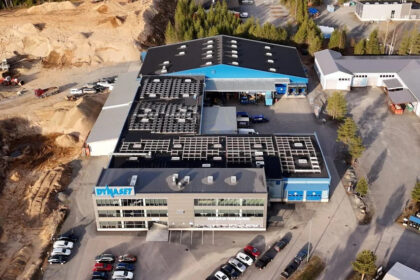
The project is being developed in collaboration with Dismet, Tomra’s local integrator, to support the design and implementation of a solution tailored to the specific requirements of the El Bagre operation.
Controlling the process and increasing value
Tomra’s sensor-based sorting solutions can simultaneously improve process control and material value. By removing non-valuable material early, operations can better manage the volume and consistency of feed entering the plant, while also increasing the value of the process stream.
Romero said, “By rejecting waste early, you contain variability and unnecessary processing load, while obtaining a higher-value material stream. This has a direct impact on how efficiently the plant can operate.”
By combining Tomra’s XRT sensing, deep learning, and precise ejection technology, Tomra enables mining operations to stabilise processing conditions, reduce unnecessary throughput and unlock value from material that may be considered marginal.